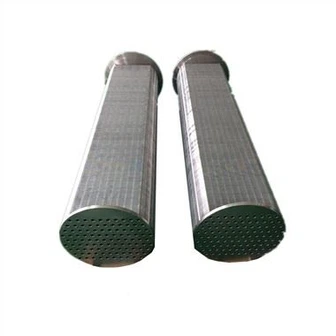
What Factors Affect The Performance Of A Lube Oil Cooler For Main Engine?
The lube oil cooler is a critical component in a ship's propulsion system. Its role is to maintain the lube oil within the correct temperature range to ensure proper lubrication, viscosity stability, bearing protection, and efficient engine operation.
1. Heat Load from the Main Engine
The hotter and larger the engine, the greater the heat that must be removed.
What affects heat load?
Engine load (higher load = more heat)
Oil circulation rate
Oil inlet temperature
Oil viscosity
If the engine operates continuously at high load, the cooler must be sized accordingly.

2. Cooling Water Temperature & Flow Rate
The cooling medium is normally jacket water (LT water) or central cooling fresh water, sometimes seawater.
Cooler performance drops when:
Cooling water inlet temperature is too high
Cooling water flow rate is insufficient
Fouling or scale reduces water-side heat transfer
Higher seawater temperatures in tropical regions often require larger or dual coolers.
3. Fouling on Oil Side & Water Side
Fouling is one of the biggest contributors to cooling inefficiency.
Oil-side fouling:
Oxidized oil sludge
Carbonized deposits
Contaminants (fuel, soot, wear particles)
Water-side fouling:
Seawater scaling
Biofouling, algae, barnacles
Rust deposits in LT/HT water
Regular cleaning is essential for stable cooling performance.
4. Tube Material and Thermal Conductivity
Different tube materials significantly affect heat transfer efficiency.
Common materials:
CuNi 90/10 or 70/30 – excellent marine corrosion resistance
Admiralty brass – high conductivity, moderate resistance
Stainless steel – durable but lower conductivity
High thermal conductivity = better cooling performance.
5. Cooling Surface Area (Tube Length, Quantity, and Fins)
The total effective heat transfer area determines how much heat the cooler can remove.
Performance depends on:
Number of tubes
Tube diameter
Tube length
Thickness and spacing of fins (for finned-tube coolers)
Undersized coolers cause oil temperature to rise under high load.
6. Oil Viscosity and Flow Characteristics
Oil viscosity changes with temperature, influencing how efficiently it flows through the cooler.
Performance issues occur when:
Oil viscosity becomes too high (cold start)
Flow rate is below design
Oil bypass valve is malfunctioning
Correct oil flow ensures even heat distribution across the tube bundle.
7. Bypass Valves and Thermostatic Control
Many marine engines use thermostatic valves to maintain oil temperature.
Cooling is affected if:
The thermostat malfunctions
Incorrect bypass setting leads to partial cooling
Valve leakage reduces effective flow through the cooler
Good valve control provides stable oil outlet temperature.
8. Pressure Drop Across the Cooler
A high-pressure drop leads to reduced flow and lower performance.
Causes include:
Blocked tubes
Damaged fins
Debris accumulation
Undersized cooler
Marine classification societies often specify maximum allowable pressure drop.
9. Environmental & Operating Conditions
Warm seawater or tropical ambient conditions
High vibration from the engine
Corrosion from seawater leaks
Long operating hours at high continuous loads
Coolers in harsh environments require stronger materials and corrosion protection.
10. Maintenance & Cleaning Practices
Even a well-designed cooler loses performance over time if not properly maintained.
Essential maintenance:
Regular tube bundle cleaning
Back-flushing
Monitoring oil contamination
Checking gaskets and seals
Inspecting for corrosion or erosion
Preventive maintenance dramatically extends cooler lifespan.
The performance of a marine Main Engine lube oil cooler depends on a combination of thermal design, material selection, fluid characteristics, fouling conditions, and operational practices. Ensuring correct cooling water flow, maintaining cleanliness, and choosing the right tube material are essential for achieving stable oil temperatures and reliable engine performance.