What Are The Benefits Of Water Cooled Lube Oil Coolers?
What are the Benefits of Water Cooled Lube Oil Coolers?
High cooling efficiency: water has a large specific heat capacity (about 4.2kJ/(kg・℃)), excellent thermal conductivity, fast and effective heat exchange with lubricating oil. Under the same working condition, it can quickly cool the high-temperature lubricating oil to the set temperature range, ensuring that the lubricating oil of the turbine and other equipments is always at the optimal working temperature (usually 40-55℃), and safeguarding the lubrication and heat dissipation effect of the equipments.
Stable and reliable operation:
The supply of cooling medium (water) is relatively stable (especially in power plants with circulating water system), and the flow rate and temperature can be easily adjusted through valves and temperature control devices, so that it can adapt to fluctuations in lubricating oil load (such as changes in oil temperature during startup and shutdown of the unit and changes in load).
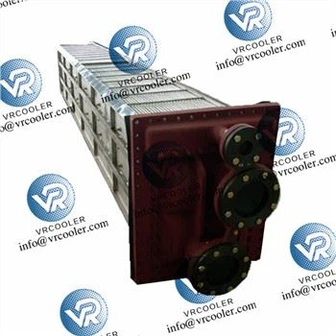
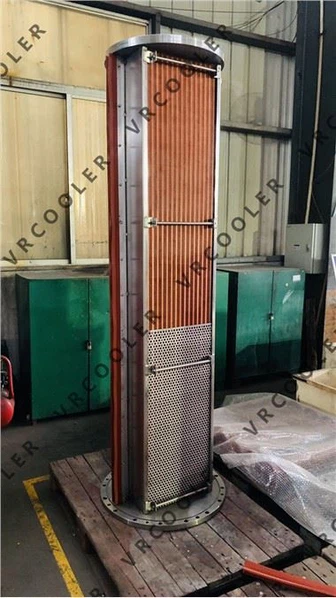
The structure mostly adopts shell and tube design, the shell and heat exchanger tube material (such as stainless steel, copper tube) has strong pressure and shock resistance, can withstand the pressure and temperature changes of the lubricating oil system, and the failure rate is low.
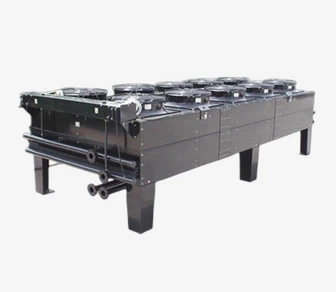
Adaptation to high load scenarios: For large generating units (such as steam turbines of megawatt class or above), with large lubricating oil circulation and high heat generation, water-cooled coolers can meet the cooling demand under high load by designing a larger heat exchange area and optimizing the water flow rate, etc., whereas other types of air-cooled and other types of coolers may be incapable of doing the job due to insufficient heat dissipation capacity under the same conditions.
Precise temperature control: The outlet temperature of the lubricating oil can be precisely controlled by series temperature control valves and adjusting the cooling water flow rate. For example, when the oil temperature is too high, increase the cooling water flow rate to enhance heat dissipation; when the oil temperature is too low, reduce the flow rate to maintain the temperature, avoiding the fluctuation of oil temperature affecting the lubrication performance of the equipment (such as poor lubrication due to viscosity changes).
Relatively reasonable footprint: Compared with air-cooled coolers with the same cooling capacity (requiring more space for heat sinks and fans), water-cooled coolers (especially shell and tube) have a compact structure and a more flexible installation and layout in the plant, making them suitable for power plant engine rooms with limited space.
Maintenance costs can be controlled:
Routine maintenance mainly includes regular cleaning of heat exchanger tubes (to remove scale and oil), checking seals (to prevent leakage), etc. The operation process is mature and easy to be mastered by maintenance personnel.
If the power plant circulating water system is used as the cooling water source, there is no need to invest in additional cooling medium (such as air-cooled fan energy consumption), and the long-term operating costs are low.