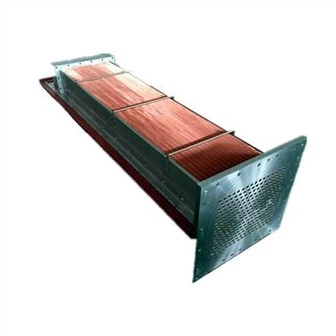
Waste Heat Recovery For Petrochemical Industry
1, Waste heat resources in the petrochemical industry: large quantity, wide coverage, and complete grade
The entire process of petrochemical production is accompanied by a large amount of waste heat, covering the high, medium, and low temperature ranges, with stable and scalable resource recovery:
High temperature waste heat (>500 ℃): Ethylene cracking furnace, catalytic cracking regenerator, heating furnace exhaust gas, and conversion furnace exhaust gas;
Medium temperature waste heat (150-500 ℃): bottom material of distillation tower, reaction products, medium pressure steam condensate;
Low temperature waste heat (<150 ℃): tower top gas, circulating cooling water, air-cooled heat dissipation, condensed water exhaust, device heat dissipation.
According to industry data, the utilization rate of waste heat recovery in the global petrochemical industry is about 32%, far lower than that of the steel and cement industries, and there is huge potential for further development.
2, Core application scenario: From the device to the entire plant, waste heat is "exhausted"
1. Refinery unit: the main battlefield for waste heat recovery
Atmospheric and vacuum distillation unit: preheating air/crude oil with residual heat from the flue gas of the heating furnace, preheating feed with residual heat from the bottom of the tower, reducing the exhaust gas temperature to below 90 ℃, and increasing the thermal efficiency of the heating furnace to over 92%;
Catalytic cracking: Regenerate flue gas waste heat to produce medium and high pressure steam, drive the steam turbine to drive the main fan/generator, achieving "thermal power generation and electric drive";
Hydrogenation/reforming: Preheating the feed with residual heat from the reaction product reduces the load on the heating furnace, resulting in a 10% -15% decrease in overall energy consumption of the device.
2. Ethylene/Chemical Plant: High temperature waste heat efficient conversion
Ethylene cracking furnace: enhanced heat transfer in the convection section+recovery of flue gas waste heat, increasing thermal efficiency by 1% -1.5%, increasing ultra-high pressure steam production by 20%, and extending coke cleaning cycle by 30% -50%;
Ethylene glycol/aromatics: Preheating raw materials with low-temperature waste heat at the top of the tower, producing steam with medium temperature waste heat at the bottom of the tower, and replacing steam with low-temperature heat from the aromatics unit, saving nearly ten million yuan in annual costs.

3. Large scale utilization of low-temperature waste heat: from "waste heat" to "treasure"
Low temperature waste heat accounts for over 60% of the total petrochemical waste heat and has been a key technological breakthrough in recent years
Heat pump heating: Absorption/centrifugal heat pumps elevate low-temperature heat from 40-80 ℃ to 90-120 ℃, used for heating, hot water, and process preheating;
MVR exhaust steam upgrade: Mechanical steam recompression converts low-pressure exhaust steam into usable steam, resulting in an annual carbon reduction of over 10000 tons in the sulfur unit of Daxie Petrochemical;
Circulating water waste heat: Recovering circulating water for heat dissipation and supplying heating/cooling to the park, saving 75000 tons of standard coal annually in the JN refining project.
4. Whole plant energy coupling: cooling heating electricity steam triple supply
By optimizing the steam pipeline network, integrating heat, and utilizing cascades, we can achieve:
High temperature waste heat power generation/high-pressure steam production;
Preheating and driving refrigeration using medium temperature waste heat technology;
Low temperature waste heat heating, domestic hot water, and heat tracing;
The residual pressure recovery drives the turbine to generate electricity, and the energy utilization rate is further increased by 5% -8%.
4, Value and benefits: not only energy saving, but also competitiveness
Economic benefits: Fuel consumption decreases by 10% -25%, steam self supply rate increases, and processing costs per ton of oil decrease by 5-15 yuan;
Carbon reduction benefits: 10000 ton refineries reduce CO2 emissions by 20-50000 tons annually, helping to achieve carbon peak and carbon neutrality;
Device benefits: reduce cooling load, decrease scaling and corrosion, extend operating cycle, and improve product yield;
Policy benefits: Meet the requirements of energy-saving review, carbon verification, and energy efficiency "leaders", and enjoy technological transformation subsidies and tax incentives.
Waste heat recovery is not an 'extra investment', but the most cost-effective green investment in the petrochemical industry. In the context of high energy prices and increasingly strict environmental constraints, whoever can achieve the "full recovery and cascade utilization" of waste heat earlier will be able to occupy the core advantages of cost, energy efficiency, and low-carbon. In the future, with the development of heat pumps ORC, Thermal integration and digital technology continue to advance, and petrochemical waste heat recovery will move towards full plant, intelligent, and high recovery rates, becoming a standard capability for high-quality development in the industry.