The Application Value Of Jenbacher JMS624 1238393 Engine Intercooler in Biogas Power Plants
In the wave of global energy structure transformation towards clean and low-carbon, biogas power generation, as the core form of biomass energy utilization, has become an important component of industrial and municipal energy systems due to its resource recycling and environmental advantages. The Jenbacher JMS624 1238393 engine, as a V-shaped 24 cylinder two-stage turbocharged model, has become the core power choice for large biogas power plants with a super output power of 4500kW and a high efficiency performance of 47.1%. As a key supporting equipment for the intake system of the engine, the dedicated intercooler not only solves the unique working conditions of biogas power generation, but also becomes the core support for improving unit stability, extending service life, and optimizing environmental benefits.

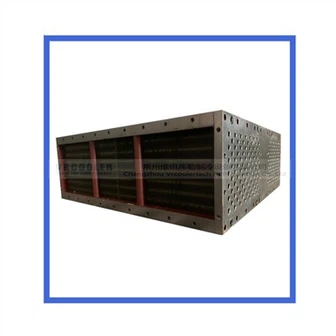
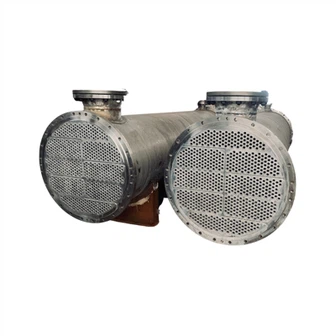
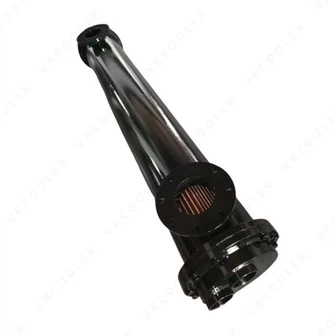
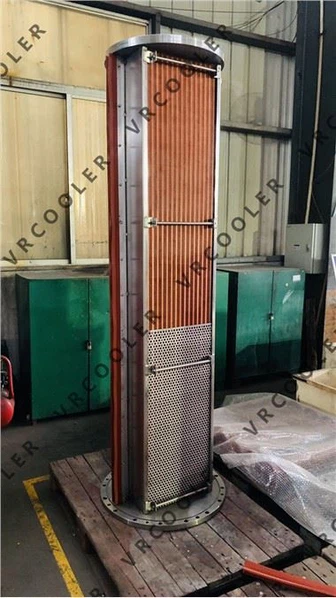
In terms of improving work efficiency, the dedicated intercooler perfectly matches the two-stage turbocharging system of Jenbacher JMS624 1238393. During turbocharging, the temperature of biogas will significantly increase, leading to a decrease in density, which directly affects combustion efficiency and power output. The intercooler cools the high-temperature and high-pressure biogas to a low-temperature and high-pressure state through efficient heat exchange between the tube and shell sides, significantly improving the charging efficiency and allowing the biogas to fully mix and burn with air. This not only ensures the stable output of the engine's 4.5MW rated power, but also further reduces fuel consumption. The heat dissipation efficiency of some high-performance models can reach 96%. Combined with corrugated structure heat dissipation fins and optimized flow channel design, the maximum heat transfer area is achieved in a compact space, which not only adapts to the site limitations of biogas power plants, but also improves overall energy utilization by reducing boost power consumption.
The technological optimization of intercoolers has also brought multiple additional values to biogas power plants. In terms of safety assurance, low-temperature intake effectively reduces the risk of engine knocking and explosion, avoids unexpected situations that may be caused by high-temperature biogas, and reduces noise pollution. In terms of environmental benefits, efficient combustion significantly improves the conversion rate of methane in biogas, reducing 1 ton of methane emissions by 25 tons of carbon dioxide equivalent, making a positive contribution to mitigating the greenhouse effect. In addition, some specialized intercoolers adopt a detachable heat exchanger design, combined with anti-corrosion materials and sealing gasket structures, which not only reduces the cost of component replacement during maintenance, but also converts the heat absorbed during the cooling process into hot water at around 90 ℃ through a heat recovery system, which can be used for heating biogas digesters or plant areas, achieving the cascade utilization of energy.