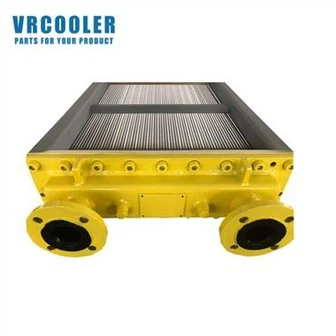
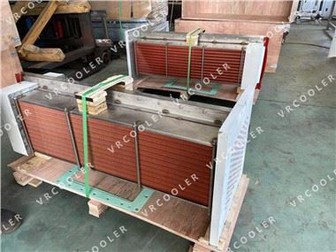
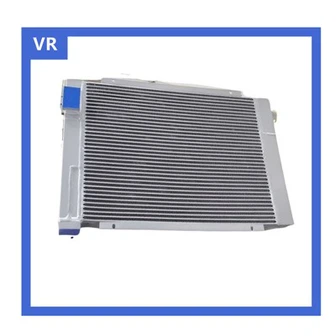
Shell Tube Condenser For Clients From Greece
Shell Tube Condenser for Clients from Greece


Overview of the shell and tube condenser:
Design:
Shell: The outer shell is a cylindrical vessel that encases the entire condenser unit.
Tubes: Inside the shell, there is a bundle of tubes through which the hot refrigerant vapor flows. The tubes are typically made of materials such as copper or aluminum.
Cooling Medium: Water is circulated the tubes to absorb the heat from the refrigerant.
Heat Exchange Process:
Hot refrigerant vapor from the compressor enters the condenser tubes.
As the vapor flows through the tubes, it releases heat to the surrounding water, causing the refrigerant to condense into a liquid state.
The cooling water absorbs the heat, and the warmed water is then typically pumped away for further cooling or discharged.
Shell and Tube Configuration:
The shell and tube design provides a large surface area for heat exchange, allowing efficient transfer of heat between the refrigerant and the cooling water.
The refrigerant and cooling water flow in counter-current or parallel paths, optimizing the heat transfer process.
Condensation and Subcooling:
The primary purpose of the shell and tube condenser is to facilitate the phase change of the refrigerant from vapor to liquid (condensation) and to subcool the refrigerant.
Subcooling involves further cooling the liquid refrigerant below its saturation temperature to enhance the system's efficiency.
Materials:
The materials used for the tubes and the shell are selected based on factors such as corrosion resistance and thermal conductivity. Copper and aluminum are common choices.
Applications:
Shell and tube condensers are widely used in air conditioning systems, refrigeration systems, heat pump systems, and industrial processes where the removal of heat is critical.