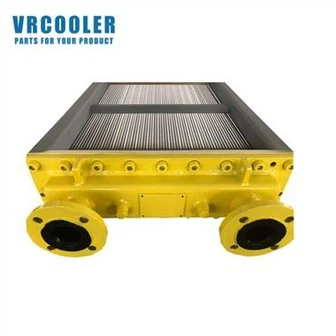
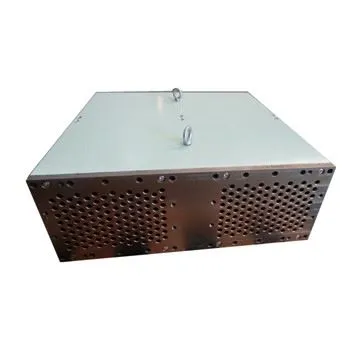
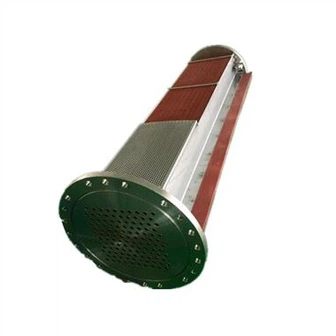
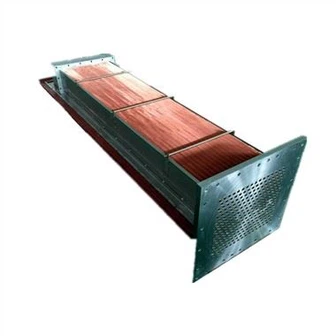
Shell And Tube Heat Exchangers in Pulp Mills For Steam Heating Of Heavy Oil
Pulp mill utilizes shell and tube heat exchanger
Shell and tube heat exchangers are used in pulp mills for steam heating of heavy oil, which is then transferred to oil-fired boilers to provide a stable heat source for the drying process.
In pulp mills, the use of shell & tube heat exchanger (Shell & Tube Heat Exchanger) to realize the thermal energy cycle of steam heating heavy oil → oil boiler supply → drying process is a highly efficient and stable energy utilization solution.
Working Principle
Heat transfer path
Steam side: Saturated steam (4-10 bar, 150-180℃) from waste heat boiler or cogeneration system enters the shell side of the heat exchanger, releasing latent heat and condensing into liquid water.
Heavy oil side: low-temperature heavy oil (initial 40-60 ℃) flows through the tube, absorbing steam heat and warming to 90-120 ℃, viscosity from 200-400 cSt down to 15-50 cSt, to meet the boiler atomized combustion requirements.
Condensate Recovery: Condensate (80-100°C) is returned to the boiler system through the trap, realizing a closed loop.
Process Control Points
Steam pressure needs to fluctuate steadily by ≤±0.5 bar to avoid excessive fluctuation of heavy oil temperature.
The flow rate of heavy oil is controlled at 1.5-2 m/s to prevent low-speed coking.
The outlet temperature is controlled by PID with an accuracy of ±2℃.
Material selection
Tube bundle: 316L stainless steel is preferred, which is sulfur corrosion resistant (sulfur content of heavy oil can be up to 3%) and has good thermal conductivity (16 W/(m-K)).
Shell: carbon steel lined with anti-corrosion coating, economy and durability.
Folding plate: perforated stainless steel structure, pressure drop is reduced by 15-20% compared with the traditional single bow type.
Anti-coking optimization
Structural design: Variable diameter tube enhances the flow rate to 1.8 m/s, reducing the risk of carbon buildup.
Online cleaning: Configured with rotating tube brush system, automatic scale removal every 8 hours.
Monitoring means: Distributed fiber optic temperature measurement network monitors tube wall temperature anomalies in real time.

Synergy with Paper Process
Steam source integration
Mainly utilizes waste heat steam from alkali recovery boiler (45%) and cogeneration unit (30%) to reduce primary energy consumption.
Backup gas boiler (15%) ensures uninterrupted operation of the drying line.
Drying energy efficiency improvement
Graded heating: The boiler generates 300℃ hot air for primary drying and 180℃ circulating hot air for secondary drying.
Waste heat recovery: Boiler flue gas (200℃) preheats heavy oil to 60℃, reducing steam load.
Troubleshooting and Maintenance
Typical fault tree
Insufficient heavy oil temperature: May originate from low steam pressure, clogged traps or coking of pipe walls.
Abnormal pressure drop: Indicative of a damaged folding plate or clogged oil line.
Maintenance Strategies
Daily: Check steam pressure and temperature sensor calibration.
Monthly: Flush pipe side screens and test seals.
Annual: chemically clean tube bundles, ultrasonic thickness measurement to check for corrosion.
Economic Benefits and Environmental Friendliness
Cost Comparison
Compared to an electric heating system, the steam heat exchange solution reduces annual energy costs by 44.8% ($2.6 million/year for a plant with an annual capacity of 300,000 tons, for example).
Maintenance costs are reduced by 37.5% and equipment life is extended to more than 15 years.
Emission reduction effect
CO₂ emissions reduced from 12,000 tons/year to 6,800 tons, a 43.3% reduction.
Condensate is 100% recycled, reducing wastewater treatment load.