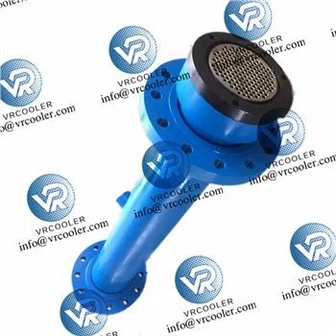
Shell And Tube Coolers For CO₂ Compressors
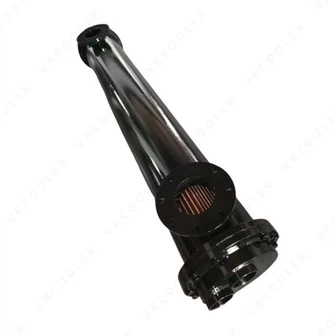
CO₂ compressors are widely used in industrial refrigeration, food processing, cold storage, chemical plants, and emerging transcritical CO₂ systems. Due to the high operating pressures and elevated discharge temperatures of CO₂ compression, effective and reliable cooling is critical. A shell and tube cooler is one of the most proven and robust heat exchanger solutions for CO₂ compressor applications, ensuring safe operation, stable performance, and long equipment life.
Shell and tube coolers are commonly applied as aftercoolers, intercoolers, oil coolers, or gas coolers, depending on the compressor configuration and system design.

Typical Applications in CO₂ Compressor Systems
1. CO₂ Aftercoolers
Installed downstream of the compressor to reduce gas temperature before entering downstream equipment.
Benefits:
Reduces thermal stress on piping and valves
Improves system efficiency
Protects seals and elastomers
2. Intercoolers (Multi-Stage Compression)
Used between compression stages to lower inlet temperature of the next stage.
Benefits:
Reduces compression work
Improves volumetric efficiency
Lowers discharge temperature of final stage
3. CO₂ Gas Coolers (Transcritical Systems)
In transcritical CO₂ refrigeration systems, shell and tube gas coolers reject heat without condensation.
Benefits:
Stable heat rejection under high pressure
Compact design with high heat transfer rates
Suitable for water-cooled installations
4. CO₂ Compressor Oil Coolers
Used to cool lubricating oil separated from the compressed gas.
Benefits:
Maintains oil viscosity and lubrication quality
Protects bearings and moving parts
Extends compressor service intervals
Key Design Considerations
When designing a shell and tube cooler for CO₂ compressor service, several critical factors must be addressed:
Design pressure: Often exceeding 100 bar on the CO₂ side
Design temperature: High discharge gas temperatures
Tube material: Stainless steel or high-strength copper alloys
Shell material: Carbon steel or alloy steel with suitable pressure rating
Tube-side vs shell-side selection: CO₂ typically on tube side for higher pressure containment
Cooling medium: Water, glycol, or other secondary fluids
Pressure drop limitations: To maintain compressor efficiency
Designs typically comply with ASME Section VIII, PED, or equivalent pressure vessel standards.
Typical Construction Features
Fixed or U-tube bundle configuration
Enhanced internal tube surfaces for improved heat transfer
Baffles designed for optimal flow distribution
Corrosion allowance and safety margins for long-term operation
Case Study: Shell and Tube Aftercooler for an Industrial CO₂ Compressor
- Project Background
A cold storage facility operating an industrial CO₂ refrigeration system experienced high compressor discharge temperatures, leading to reduced system efficiency and increased maintenance.
- Challenges
High discharge pressure and temperature
Limited space for air-cooled solutions
Requirement for high reliability and safety
- Solution Implemented
A water-cooled shell and tube CO₂ aftercooler was supplied and installed.
- Key Design Parameters
Refrigerant: CO₂ (R744)
Design pressure (CO₂ side): 120 bar
Cooling medium: Closed-loop cooling water
Construction: Stainless steel tubes, carbon steel shell
Compliance: ASME pressure vessel code
- Results Achieved
Compressor discharge temperature reduced by over 30 °C
Improved system efficiency and stable operation
Reduced thermal stress on downstream components
Long-term, trouble-free operation
Conclusion
A shell and tube cooler for CO₂ compressors is a dependable and industry-proven solution for managing the high pressures and temperatures inherent to CO₂ systems. Whether used as an aftercooler, intercooler, gas cooler, or oil cooler, this heat exchanger type delivers superior mechanical strength, thermal performance, and serviceability.