Repair And Maintenance Of Dry Coolers
1, Daily inspection (daily/shift)
Operating parameter recording: Record the inlet and outlet air/liquid temperature, fan current, vibration, noise, and ambient temperature, and compare them with the reference values.
Appearance inspection: Check for dust accumulation, deformation, and corrosion on the fins; The fan has no abnormal noise or vibration; Check for frost and oil stains (leaks) in the pipeline.
Electrical and safety: Check whether the wiring terminals, motor temperature rise, and protection devices (overload, overheating) are normal.
Drainage/Discharge: When there is a condensate system, check if the automatic drain is unobstructed.
2, Regular maintenance (by cycle)
1. Weekly
Clean the inlet filter and louvers (if any) of the fan to ensure smooth air intake.
Check the tightness of the fan belt (if any) for any slippage or excessive wear.
Visual leak detection: Focus on checking for oil stains on joints, flanges, and valves.
2. Monthly
Fin cleaning: After power failure, use 0.3-0.5MPa compressed air to blow from the inside out; Soak the oil stains in neutral cleaning agent and rinse. It is strictly prohibited to use high-pressure water guns to directly flush to prevent the fins from tipping over.
Fan maintenance: clean blades; Check the temperature and vibration of the bearings; Supplement/replace lubricating grease.
Structural fastening: Check the anchor, bracket, and bundle fixing bolts to eliminate looseness.
Electrical inspection: tighten wiring, test insulation, clean dust from the electrical control box.
3. Quarterly
Deep leak detection: Use soap water or halogen leak detector to detect all joints, welds, and valves. If the annual leak rate is>2g, repair welding and vacuum re injection of refrigerant are required.
Fan performance: test air volume and pressure; Calibrate frequency conversion/speed control; Check the insulation resistance of the motor.
Heat transfer performance: If there is a significant decrease in temperature difference between the inlet and outlet, deep cleaning or chemical descaling is required.
Safety device: Verify pressure, temperature, vibration alarms and interlocks.
4. Every six months
Internal inspection of the tube bundle (when the medium on the tube side is prone to scaling/corrosion): Remove the end cap and check for scaling, corrosion, and blockage on the inner wall; Mechanical dredging or chemical cleaning (such as citric acid solution) may be necessary.
Seal replacement: Replace aging O-rings and gaskets to prevent leakage.
Anti corrosion inspection: touch up paint on damaged coating areas; Check the consumption of sacrificial anodes.
5. Annual major overhaul
Comprehensive disassembly and inspection: comprehensive maintenance of fins, tube bundles, fans, motors, reducers, frames, and foundations.
Core component replacement/calibration: replace bearings, belts, and seals; Calibrate instruments and sensors.
Refrigeration/medium system: detecting refrigerant purity and moisture content; Replace the dry filter; Add refrigerant according to the nameplate.
Performance testing: Run at full load to verify that the heat transfer efficiency, pressure drop, noise, and vibration meet the standards.

3, Key component maintenance
1. Fan system (with the highest failure rate)
Blade: Clean, inspect for cracks/deformations/corrosion, and perform dynamic balance correction if necessary.
Bearings: Regularly change grease/oil according to the manual; Monitor temperature (≤ 80 ℃) and vibration; Immediately shut down for maintenance in case of abnormalities.
Belt drive: moderate tension (downward pressure of 10-15mm); Group replacement to avoid mixing old and new.
Motor: Check insulation, temperature rise, and current; Clean the heat dissipation port; Regular lubrication of bearings.
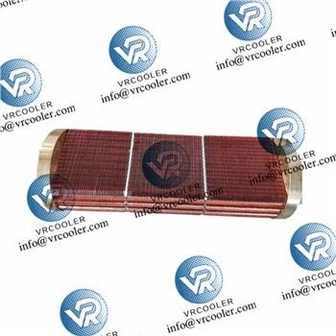
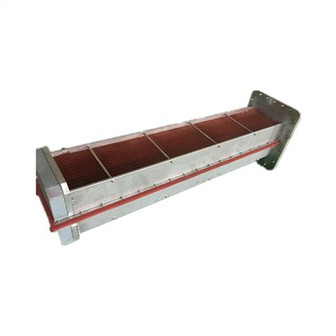
2. Fin tube bundle (heat exchange core)
Cleaning priority: The fins of the air-cooled dry cooler accumulate 1mm of dust, causing a decrease in heat transfer efficiency of about 30% and an increase in energy consumption of 5% -10%. Regular dust cleaning is necessary.
Cleaning method: Mild dust accumulation → Compressed air blowing; Moderate to neutral cleaning agent+low-pressure water; Heavy duty → chemical cleaning+high-pressure water (professional operation).
Repair: Use a specialized comb tool to correct slight lodging; Replace the finned tube section due to severe damage.
3. Pipelines and valves
Leakage treatment: If oil stains/frost are found, leak detection should be carried out immediately; Tighten small leaks, weld/replace large leaks; Maintenance under pressure is strictly prohibited.
Valve: Check the flexibility and sealing of opening and closing; Regularly lubricate the screw rod; Replace the faulty valve in a timely manner.
4. Electrical and Control
Wiring: Regularly tighten to prevent loosening and overheating; Replace the damaged cable immediately.
Protection device: Overload, short circuit, overtemperature, and overpressure protection are tested monthly to ensure reliable operation.
Sensors: Temperature, pressure, and vibration sensors are calibrated quarterly and replaced if the error exceeds the tolerance.
4, Winter antifreeze (key)
Thoroughly drain the water stored in the tube bundle, pipeline, and manifold during shutdown, and if necessary, use compressed air to blow to prevent freezing and cracking.
Long term shutdown: medium side nitrogen protection; Ensure that fans and motors are moisture-proof and dust-proof.
Operation antifreeze: Control the start stop/speed regulation of the fan in low-temperature environments to avoid local supercooling and icing; Add a heat tracing system if necessary.