Offshore Generator Bearing Coolers (Oil & Gas Platforms) | VRCOOLER
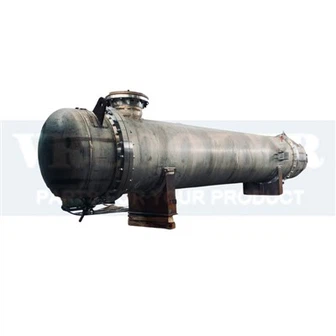
For offshore production platforms (fixed jackets, compliant towers, tension-leg platforms) and floating production storage and offloading units (FPSO/FLNG) operating large offshore gas turbine generators and emergency diesel gensets (2 MW to 60+ MW, driven by Solar, GE, Siemens, Rolls-Royce, or Wärtsilä turbines/engines), VRCOOLER custom-engineers and manufactures heavy-duty, marine-certified Generator Bearing Lube Oil Coolers. Continuous rotational friction and hydrodynamic shearing in high-speed turbine generator journal and thrust bearings reject intense heat (30 kWth to 800+ kWth) into the centralized lubricating oil system. VRCOOLER Offshore Generator Bearing Coolers utilize closed-loop central fresh water (LT cooling water) or direct raw seawater to cool hot bearing oil from +75°C to +85°C (+167°F to +185°F) down to a stable +45°C to +50°C (+113°F to +122°F). Engineered for hazardous area (ATEX / IECEx Zone 1 & Zone 2) and harsh offshore marine salt-spray environments (ISO 12944 C5-M / CX), our coolers feature seamless Titanium Grade 2, Super Duplex 2507, CuNi 90/10, or SS316L double-tube safety matrices with electronic leak-detection alarms, heavy forged tubesheets, cast marine bronze waterboxes, and full marine/offshore classification certifications (DNV, ABS, Lloyd's Register, Bureau Veritas, CCS).

Critical Offshore Engineering Challenges Solved by VRCOOLER:
Elimination of Water Contamination into Turbine Bearings: A pinhole leak in a conventional single-tube cooler allows high-pressure cooling water to penetrate the oil stream. Water in turbine lube oil causes rapid oil foaming, loss of hydrodynamic film thickness, Babbitt metal wiping, and catastrophic rotor-stator rubs. VRCOOLER integrates double-tube concentric safety matrixes with integrated moisture sensors to eliminate water-in-oil risks completely.
Extreme Saline & Marine Atmosphere Corrosion (C5-M / CX): Offshore platform air contains high concentrations of chloride salt spray, hydrogen sulfide (H2S), and humidity. VRCOOLER manufactures structural frames and shells using SS316L, Duplex 2205, or heavy carbon steel coated with multi-layer offshore epoxy systems (min. 350−500 μm DFT).
Resistance to High-Velocity Seawater Pitting & Bio-Fouling: When cooled directly by lift-pump seawater, standard stainless steels suffer from chloride stress corrosion cracking (SCC) at elevated temperatures. VRCOOLER specifies pure Titanium Grade 2 or CuNi 70/30, delivering 100% resistance to bio-corrosion, pitting, and micro-fouling.
High Vibration & Pitch/Roll Resistance: Turbines and structural platform decks experience continuous harmonic vibrations and sea-induced dynamic deflections. VRCOOLER designs vibration-damped tube support baffles, reinforced tubesheet expansion joints, and heavy-duty structural saddles.
At VRCOOLER, every offshore generator bearing oil cooler is custom-engineered to meet strict offshore safety guidelines and pressure vessel standards:
1. Concentric Double-Tube Safety System with Electronic Leak Detection
Twin Concentric Tube Matrix: The inner tube carries cooling water (seawater or central fresh water), while the outer tube carries external radial fins in contact with lube oil.
Capillary Leak-Routing Channels: If the inner tube breaches due to erosion or wear, the leaking water is routed along micro-grooves into an external leak chamber fitted with an electronic conductivity probe and optical sight glass, triggering a control room alarm without water entering the turbine oil loop.
2. Dual-Pass & Multi-Pass Shell-and-Tube (TEMA BEU / BES / CFU)
Removable U-Tube & Floating Head Bundles: Enables complete bundle extraction for inspection, ultrasonic wall thickness verification, and mechanical tube cleaning during platform scheduled turnarounds.
Heavy Forged Naval Brass / Stainless Steel Tubesheets: Precision double-grooved tube holes with automated CNC orbital torque-controlled roller expansion guarantee leak-tight joints rated up to 25 bar.
Cast Marine Bronze / 100% Solid SS316L Waterboxes: Unboltable channel bonnets equipped with sacrificial zinc or aluminum pencil anodes provide active cathodic protection against galvanic corrosion.
3. Explosion-Proof Skid Integration (ATEX / IECEx Zone 1 & Zone 2)
Complete skid assemblies supplied with dual redundant 100% capacity coolers (duplex changeover arrangement), 3-way thermostatic control valves, differential pressure transmitters, and explosion-proof junction boxes.
When offshore platform generator coolers suffer from tube thinning, shell erosion, or legacy cooler obsolescence, VRCOOLER provides turnkey replacement support:
1:1 Dimensional Interchangeability: Sized to match existing skid piping centerlines, flange connections, and foundation bolt footprints (compatible with units by Alfa Laval, GEA, Sondex, Serck, and Bloksma).
Helicopter / Crane Packaging Compliance: Fabricated in lightweight titanium/duplex modular sections tailored to offshore crane lift weight limitations and narrow platform access hatches.
Full Marine & Offshore Traceability: Shipped with EN 10204 3.1 material certificates, NACE MR0175 / ISO 15156 sour service compliance, ASME U-Stamp / PED 2014/68/EU certificates, and DNV/ABS offshore inspection stamps.
Why Offshore EPCs & Energy Operators Partner with VRCOOLER
Zero Water-in-Oil Risk: High-reliability double-tube safety architecture completely isolates pressurized seawater from the high-voltage turbine generator oil loop.
Permanent Marine Corrosion Resistance: Titanium Grade 2 and CuNi 90/10 matrices eliminate premature maintenance and shutdown risks in offshore environments.
Fast-Track Turnaround Delivery: Dedicated emergency manufacturing channels reduce delivery timelines from months to weeks, matching offshore scheduled maintenance windows.
Global Offshore Classification Compliance: Fully compliant with DNV, ABS, Lloyd's Register, Bureau Veritas, and ASME Section VIII Div. 1 standards.
Frequently Asked Questions (FAQ)
Q1: Why is double-tube construction mandatory for turbine generator bearing coolers on offshore platforms?
A: On offshore platforms, gas turbine generators provide critical power. A single tube rupture in a conventional cooler sprays pressurized seawater directly into the turbine lube oil loop, causing immediate oil breakdown, bearing wiping, and catastrophic turbine trips. VRCOOLER double-tube coolers channel any leak to an external alarm sight glass, allowing scheduled maintenance without oil contamination or emergency power loss.
Q2: Is Titanium Grade 2 better than CuNi 90/10 for offshore seawater cooling?
A: For direct raw seawater lift circuits containing aerated marine water and silt, Titanium Grade 2 provides complete lifetime immunity to pitting, crevice corrosion, and erosion at all flow velocities. CuNi 90/10 is an excellent and cost-effective solution for central fresh water circuits and regulated seawater systems (velocity maintained between 1.5−2.2 m/s).
Q3: Are VRCOOLER offshore coolers compliant with hazardous area requirements (ATEX / IECEx)?
A: Yes. All integrated skid instruments (leak detection conductivity probes, RTD temperature transmitters, differential pressure switches) are fully rated and certified for ATEX and IECEx Zone 1 and Zone 2 (Ex d / Ex ia) hazardous platform locations.
Q4: What information is needed to quote an offshore generator bearing oil cooler?
A: Please provide the generator turbine rating (MW), lube oil type/viscosity (e.g. ISO VG 32/46), oil flow rate (m3/h or L/min), oil inlet/outlet temperatures, cooling water medium (seawater or fresh water) and inlet temperature, design pressure ratings, required hazardous area rating (ATEX/IECEx), and offshore classification society (DNV, ABS, LR).
Request an Offshore Generator Bearing Cooler Proposal
Ensure uninterrupted offshore power generation, eliminate water-in-oil contamination risks, and safeguard turbine assets with VRCOOLER.
Explore Offshore Thermal Solutions: Visit www.vrcooler.com
Submit Your Offshore Cooler RFQ: Send your generator equipment datasheets, dimensional envelopes, and operating parameters directly to our offshore energy division at [email protected] for a rapid technical proposal, 3D CAD drawing, and quotation.