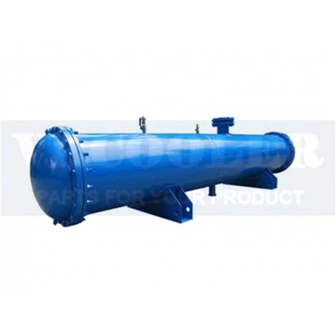
MTU 16V4000 G61 Radiator
The MTU 16V4000 G61 radiator is an essential component in the cooling system of MTU's large-bore diesel engines-specifically those in the 4000 series configured as 16-cylinder V engines. These engines are widely used in industrial power generation, marine propulsion, and heavy-duty standby applications, where reliable heat rejection is critical to sustained performance under heavy load.
The MTU 16V4000 family consists of 16-cylinder engines arranged in a V configuration with a total displacement of approximately 76.3 L. They are designed for high continuous power output in generator sets rated from roughly 1,800 kW up to above 2,200 kW depending on specific sub-model and duty cycle, with integrated cooling and radiator requirements sized accordingly.
Engines in this class reject substantial heat into both the coolant and charge-air aftercooling circuits. For example, typical MTU 16V4000 gensets reject hundreds of kilowatts of heat into the jacket water circuit and the aftercooler circuit during full load operation.

Function of the 16V4000 G61 Radiator
At its core, the radiator serves to transfer engine heat into the ambient air to keep the engine operating within safe temperature limits. In diesel applications, effective cooling is indispensable to:
Maintain optimal cylinder and combustion temperatures.
Prevent overheating of lubricants, charge-air systems, and coolant.
Enable continuous duty performance under peak load.
Support reliability in demanding settings such as data centers and industrial plants.
The radiator's job is to remove heat from the engine's jacket water (coolant) and often from the charge-air aftercooler circuit, returning cooled fluid to the engine block and aftercooler.
Key Design Attributes
1. Heavy-Duty Construction
Radiators built for the MTU 16V4000 G61 are manufactured to withstand high thermal and mechanical stress. Typical design features include:
Copper or aluminum core tubes for high heat transfer efficiency and corrosion resistance.
Robust framing, usually carbon steel or welded steel structures, to handle vibration and long service life in stationary or marine installations.
Sealed or dual-circuit cooling architecture, which enables separate heat rejection paths (e.g., jacket water vs. aftercooler cooling).
2. Dual Cooling Circuits (Where Used)
Many radiators specified for the 16V4000 platform incorporate two distinct circuits-one for the engine jacket water and one for the charge-air aftercooler. Segregating these circuits optimizes thermal control and can improve overall heat rejection efficiency.
3. Material Selection
Material choices influence performance, durability, and service life:
| Component | Common Material | Purpose |
|---|---|---|
| Core tubes | Copper or aluminum | High thermal conductivity |
| Headers & manifolds | Brass or aluminum | Corrosion resistance |
| Frame & mounts | Steel | Structural rigidity |
Thermal Performance and System Integration
The radiator must be sized and matched to the engine's heat rejection profile, which for a typical MTU 16V4000 generator set can exceed 800 kW of total heat to coolant plus hundreds of kW to the aftercooler system at full rated load.
Performance depends on ambient conditions, airflow management, and fan drive design (mechanical or electric). Radiators are normally rated for specific ambient temperature capacities (for example, designs for 40 °C or 50 °C ambient conditions), ensuring adequate cooling margin even in hot climates.
Applications and Typical Use Cases
The 16V4000 G61 radiator is found in applications where power density and reliability are paramount, such as:
Industrial power generation (standby and prime power).
Data center backup systems with high duty cycle demands.
Marine propulsion or auxiliary power units on commercial vessels.
Heavy industrial sites including mining and refined fuels production.
In these contexts, the radiator works in concert with pumps, thermostats, expansion tanks, and airflow systems to ensure the engine operates within the prescribed thermal envelope.
Maintenance Considerations
To ensure longevity and reliable performance, radiators on high-output engines require:
Routine inspection for fouling or corrosion.
Coolant quality management to prevent scaling or pitting.
Verification of airflow paths and fan operation.
Pressure testing to detect leaks, especially in multi-circuit designs.
Using OEM or OEM-equivalent replacement cores and components is critical; incorrect materials or dimensions can degrade performance and lead to premature failure.
Conclusion
The MTU 16V4000 G61 radiator is a precision cooling component engineered for high thermal loads in heavy-duty diesel engines. Its design balances material science, fluid dynamics, and rugged construction to support continuous operation in demanding industrial environments. Proper integration and maintenance are essential to ensure the engine's performance, reliability, and service life.