LT HT Remote Vertical Type Generator Radiator
LT HT Remote Vertical Type Generator Radiator
High- and low-temperature remote vertical generator radiators are an important component of the generator cooling system.
Functional principle: The primary function is to assist the generator in dissipating heat generated during operation. This is achieved by circulating coolant through the radiator, transferring heat to air or other cooling media, thereby reducing the generator's temperature and ensuring it operates within an appropriate temperature range, maintaining its performance and service life. Its working principle involves coolant absorbing heat from the generator's water jacket, flowing into the radiator, exchanging heat with air or other media within the radiator, and then returning to the generator to continue the cooling cycle.
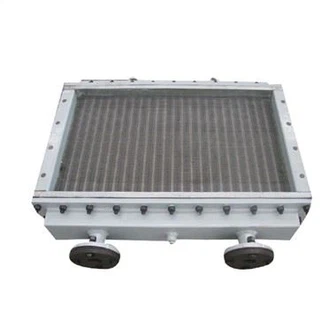
Structural Features: Typically designed in a vertical configuration, this design saves floor space and facilitates installation in confined areas such as generator rooms. The radiator consists of three parts: the upper water tank, the core, and the lower water tank. The core is the key heat dissipation component, typically composed of numerous heat dissipation tubes and fins to increase heat dissipation area and improve efficiency. Additionally, it is equipped with auxiliary heat dissipation devices such as fans to accelerate airflow and enhance heat dissipation performance.
High-temperature and low-temperature circuits: The HT (High-Temperature) circuit is typically used to cool high-temperature coolant generated by generators, such as hot water from engine water jackets. The LT (Low-Temperature) circuit is generally used to cool lubricating oil and other media with relatively lower temperature requirements, or as a secondary cooling circuit to further reduce the temperature of coolant that has undergone preliminary cooling. Through the design of high-temperature and low-temperature circuits, cooling temperatures for different components can be more precisely controlled, improving the efficiency and reliability of the cooling system.
Application Scenarios: Widely used in various types of power plants, such as coal-fired power plants, gas-fired power plants, and nuclear power plants, as well as in industrial self-contained power plants, data center backup power generators, and other facilities, it can meet the cooling requirements of generators of different power ratings and types.