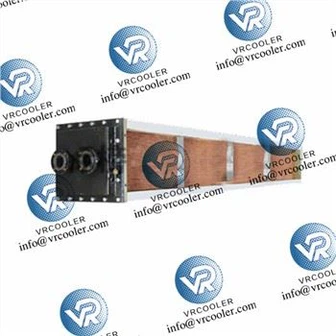
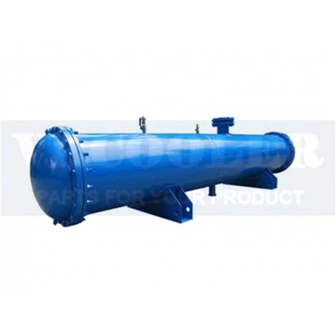
Jenbacher JMS 624 GS-N.L Remote Radiator
The remote radiator is designed specifically for the dual cooling circuit of JMS 624 GS-N.L. It separates the core heat dissipation unit from the main body of the unit, solving the heat dissipation needs of large units and breaking through the site limitations of traditional integrated radiators. Its core values are reflected in three aspects:
Suitable for high load heat dissipation: For the two cooling circuits of cylinder liner water (80-95 ℃) and boost air (40-60 ℃) of this model, customized heat exchange capacity is provided to ensure precise and controllable temperature under full load conditions;
Optimize site layout: Support independent placement of radiators outside the unit, suitable for compact or noise sensitive scenarios such as data centers and industrial parks;
Improve operation and maintenance efficiency: The heat dissipation unit is separated from the unit, and cleaning and maintenance do not require occupying space in the unit room, greatly reducing downtime for maintenance.
Technical architecture and core configuration

Core strengths
1. Optimization of noise control
The JMS 624 GS-N.L itself has a noise level of 103dB (A). The remote radiator separates the main noise sources such as fans from the unit, which can reduce the noise level in the computer room by 15-20 dB (A). It is perfectly suitable for noise sensitive scenarios such as data centers, hospitals, and commercial complexes.
2. Improved heat dissipation efficiency
The independently arranged radiator can fully utilize the ambient air and avoid the backflow of waste heat in the unit room. Compared with integrated radiators, the heat dissipation efficiency is improved by 10% -15%, while reducing the risk of power attenuation caused by overheating of the unit.
3. Ability to adapt to the entire scene
Extreme environment: configurable anti freezing heating system and anti-corrosion coating, suitable for -30 ℃ extreme cold and high salt spray coastal environment;
High load scenario: For 4.5MW level full load operation, redundant design of heat exchange capacity ensures continuous operation without overheating risk;
Multi fuel compatibility: Suitable for various fuels such as natural gas, biogas, landfill gas, etc. The cooling system can adjust the load according to the fuel type to ensure stable combustion.
Typical application scenarios
1. Large scale data center distributed energy station
Taking the distributed energy station in Shanghai International Tourism Resort as an example, five JMS 624 GS-N.L units are equipped with remote radiators, and the heat dissipation units are independently arranged outside the computer room, which not only meets the demand for 4.5MW level power and waste heat cooling and heating, but also avoids noise and heat affecting the operation of the data center, achieving maximum comprehensive efficiency.
2. Industrial cogeneration projects
In the scenario of cogeneration in industrial parks, remote radiators are used in conjunction with units to achieve cogeneration. The heat dissipation unit is placed close to waste heat utilization equipment (such as lithium bromide units) to shorten the distance of heat medium transportation, improve waste heat recovery efficiency, and simplify the layout of plant pipelines.
3. Independent energy systems in remote areas
For remote mining areas, sewage treatment plants and other scenarios without centralized energy supply, remote radiators simplify the installation process of units, support modular layout, reduce site construction costs, and ensure continuous operation of units in complex environments through efficient heat dissipation.