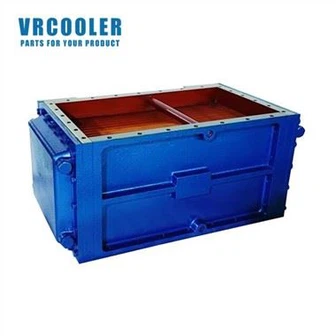
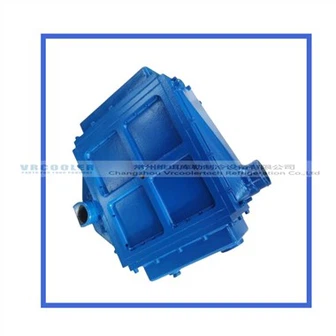
Inter And After Stage Cooler For Compressors
During the operation of a compressor, the compression of the gas results in an increase in temperature. Interstage coolers are installed between the stages of the compressor to cool the gas after each stage of compression, lowering the temperature of the gas, reducing the work required for the next stage of compression, and improving the efficiency and performance of the compressor.
After-coolers are installed after the last stage of the compressor to further cool the final compressed gas to the required temperature and condition for subsequent use or processing.
For example, in industrial air compression systems, interstage coolers and aftercoolers can help to lower the temperature of the compressed air, reduce moisture condensation, and prevent equipment damage from overheating, while improving the quality and availability of the compressed air. As another example, in refrigeration compressors, these coolers also play a key role in ensuring proper system operation and cooling effectiveness.

The main types of interstage coolers and aftercoolers are as follows:
Air-cooled coolers
Working Principle: Forcing air to flow through the heat sink through the fan to take away the heat.
Characteristics: Relatively simple structure, no need for coolant circulation system, low maintenance cost. However, the cooling effect is greatly affected by the ambient temperature.
For example, the cooler in small air compressor is often used in the occasions where the ambient temperature is low and the cooling requirement is not too high.
Water-cooled cooler
Working principle: let the cooling water flow in the tube, hot gas flow outside the tube, heat exchange through the tube wall.
Features: high cooling efficiency, can maintain a more stable cooling effect. However, it requires a matching water circulation system, and there may be a risk of water leakage.
For example: interstage coolers in large industrial compressors, which can effectively cope with high heat emissions.
Evaporative cooler
Working principle: using the principle of water evaporation and heat absorption, spraying water on the surface of the heat exchanger tube to form a water film, and at the same time through the fan to make the air forced flow, accelerate the evaporation of water, thus taking away the heat.
Characteristics: good cooling effect, relatively low water consumption. But need to regularly replenish water and maintenance of evaporation device.
For example: some of the cooling effect of the high requirements and relatively insufficient water resources of the compressor system.
Oil-cooled cooler
Working principle: using cooling oil circulating in the pipeline to absorb heat.
Characteristics: suitable for some special working conditions, such as high temperature, high dust environment. But need to pay attention to the quality of oil and oil temperature control.
For example: used in some harsh working conditions of the compressor.
Hybrid cooler
Principle of operation: combines a variety of cooling methods, such as air-cooled and water-cooled combination.
Characteristics: Combines the advantages of different cooling methods, according to the specific working conditions can be flexibly adjusted to the cooling strategy.
For example, in complex compressor systems, the cooling method can be switched according to the cooling requirements at different stages.