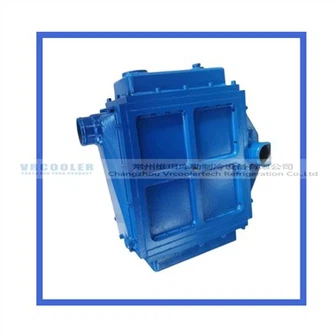
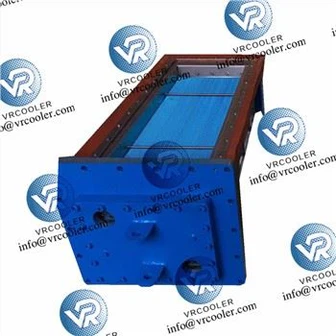
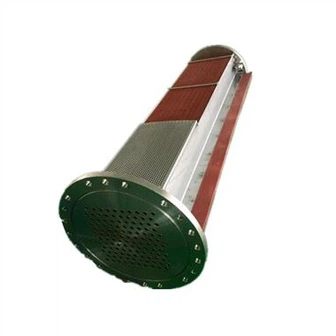
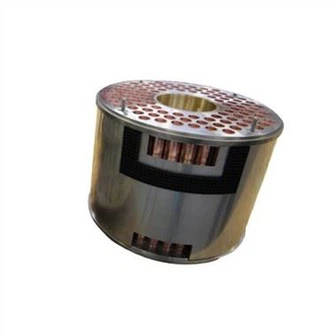
HT LT Type Remote Radiator For Cummins Gas Engine Power Plant Cooling Tower
The core positioning of the HT/LT remote radiator is to meet the heat dissipation needs of different components in Cummins gas engines during power generation. It adopts a dual circuit independent design of "high temperature (HT)+low temperature (LT)" and works in conjunction with the cooling tower through remote deployment to achieve efficient heat conduction and dissipation. Unlike traditional integrated radiators, its remote installation feature can remove the main heat source from the computer room, effectively optimizing the spatial layout of the computer room while avoiding the impact of poor ventilation on heat dissipation. This design concept is highly compatible with the trend of large-scale and intensive development of Cummins gas generator sets, especially suitable for high-power power plants above megawatt level and installation scenarios with limited ventilation conditions.
From the perspective of working principle, the HT/LT remote radiator forms a complete closed-loop cooling system with the Cummins gas engine and cooling tower. The two circuits play their respective roles and work together to ensure that all components of the unit are within the optimal working temperature range. Among them, the HT (High Temperature) circuit is mainly responsible for cooling the core high-temperature components such as the engine cylinder block. The large amount of heat generated during engine operation is absorbed by the coolant and transported to the high-temperature heat dissipation core of the remote radiator through pipelines. The cold air blown by the cooling tower undergoes heat exchange, dissipating the heat to the external environment. The cooled coolant flows back to the engine, completing the continuous cooling of high-temperature components. The outlet temperature of the HT circuit is usually controlled between 75-85 ℃, accurately matching the high-temperature working conditions of Cummins gas engines.
The LT (low temperature) circuit focuses on the cooling of auxiliary components such as the engine lubrication system, boost air, and air compressor. These components are highly sensitive to temperature, and excessive temperature can cause a decrease in lubricant viscosity and boost efficiency, thereby affecting the overall performance of the unit. After absorbing heat from auxiliary components, the coolant in the LT circuit enters the low-temperature heat dissipation core of the radiator and cools down through heat exchange with cold air. Its working temperature is usually maintained at around 37 ℃, providing temperature guarantee for the stable operation of auxiliary components. The two circuits operate independently and do not interfere with each other, ensuring effective heat dissipation for high-temperature components and avoiding the impact of excessive cooling on work efficiency for low-temperature components, fully reflecting the design concept of precise heat dissipation.

Combining the operating characteristics of Cummins gas generator sets, the HT/LT remote radiator has multiple core advantages, enabling it to adapt to the complex working environment and demanding heat dissipation requirements of power plants. Firstly, the high-efficiency heat dissipation performance is outstanding. The radiator adopts high-quality aluminum heat dissipation core, which is treated with epoxy coating or hydrophilic coating. It not only has high heat dissipation efficiency, but also effectively resists the erosion of humid and corrosive environments, especially suitable for power plants in high corrosion areas such as coastal areas. At the same time, it can be equipped with variable speed fans to automatically adjust the speed according to the coolant temperature, achieving energy saving and consumption reduction while ensuring heat dissipation effect. Secondly, remote deployment has strong flexibility. Radiators can be installed in well ventilated areas such as roofs and open spaces according to the layout of the power station. They can be connected to the engine in the computer room through pipelines, which not only solves the problem of excessive ventilation load in the computer room, but also reduces noise pollution in the computer room, creating a more comfortable operation and maintenance environment.
Thirdly, it combines adaptability and reliability. The HT/LT remote radiator has undergone prototype testing at Cummins factory and strictly follows the heat dissipation specifications of Cummins generator sets. The coolant flow rate and pressure parameters of its HT and LT circuits are accurately matched with the technical requirements of Cummins gas engines. For example, the coolant flow rate of some high-power models' HT circuit can reach 83m ³/h, and the LT circuit can reach 23m ³/h, which can perfectly adapt to Cummins gas generator sets in different power ranges. At the same time, the radiator adopts a modular design with a sturdy and durable structure, equipped with redundant fan design, which can effectively avoid heat dissipation failure caused by a single fan failure, greatly improving the reliability of the cooling system and reducing the risk of unit shutdown.
In practical application scenarios, HT/LT remote radiators are widely used in various Cummins gas engine power stations. Whether it is the main power station for industrial production, emergency power station for commercial buildings, or key scenarios such as hospitals and data centers that require high power supply stability, they can play a core role in efficient heat dissipation. For example, in the 1750KW Cummins QSV91 gas-fired generator set power station, the matching HT/LT remote radiator ensures that the temperature of each component remains stable within the standard range during long-term full load operation of the unit through a dual circuit design and strong heat dissipation from 10 electric fans, avoiding problems such as power loss and component wear caused by overheating. In addition, in power plant scenarios with extremely poor ventilation conditions such as basements, the advantages of remote radiators are more prominent. They can directly dissipate heat to the outside, completely solving the bottleneck of heat dissipation in the computer room and ensuring stable operation of the unit.
As the core component of the cooling system for Cummins gas generators, the daily maintenance and standardized operation of HT/LT remote radiators directly affect their heat dissipation efficiency and service life. During the operation and maintenance process, it is necessary to regularly clean the dust and debris on the radiator core to ensure smooth air circulation and avoid a decrease in heat dissipation efficiency due to air duct blockage; At the same time, it is necessary to regularly check the level and quality of the coolant, monitor the pressure and temperature parameters of the HT and LT circuits, and promptly replenish or replace the coolant to prevent corrosion or heat dissipation failure caused by coolant deterioration or leakage. In addition, it is necessary to regularly check the operating status of auxiliary components such as fans and water pumps, promptly troubleshoot faults, and ensure the efficient operation of the entire cooling system. This is highly consistent with the maintenance requirements of Cummins engine cooling systems and can further extend the overall service life of the unit.
With the continuous development of new energy generation technology, Cummins gas generator sets are upgrading towards high efficiency, energy saving, and large-scale direction, which puts higher requirements on the heat dissipation efficiency, reliability, and flexibility of the cooling system. The HT/LT remote radiator, with its advantages of precise dual circuit heat dissipation, flexible remote deployment, and strong adaptability, perfectly meets the technological upgrading needs of Cummins gas engines. It can not only effectively improve the operating efficiency of the power station, reduce energy consumption and operation and maintenance costs, but also provide comprehensive heat dissipation guarantee for the safe and stable operation of the unit.
In the future, with the continuous iteration of heat dissipation technology, HT/LT remote radiators will further optimize structural design, improve heat dissipation efficiency and energy-saving performance, integrate intelligent monitoring functions, achieve real-time monitoring and automatic adjustment of temperature, pressure and other parameters, provide more efficient, reliable and intelligent heat dissipation solutions for Cummins gas engine power stations, help the green and sustainable development of the gas power generation industry, and fully play the core role of Cummins gas generator sets in energy supply.