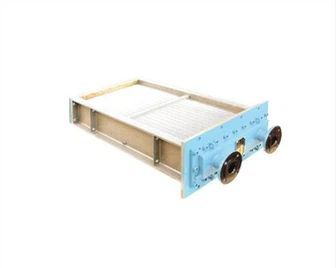
HT LT Remote Radiator For Jenbacher 416 Gas Engine (1.2 MW)
HT LT Remote Radiator for Jenbacher 416 Gas Engine (1.2 mW)
The primary function of a high-low temperature remote radiator is to assist gas engines in dissipating heat generated during operation, ensuring the engine operates within an appropriate temperature range. It achieves this by positioning the radiator away from the engine and connecting it to the engine's cooling system via pipes or hoses, enabling coolant to circulate between the engine and radiator. After absorbing heat within the engine, the coolant flows to the remote radiator. There, it exchanges heat with external air or other cooling media to dissipate the heat before returning to the engine to continue the cooling cycle.
Advantages and Features:
Adaptability to Complex Environments: It better accommodates complex engineering conditions and spatial constraints. For instance, in confined industrial spaces or locations with special installation requirements, the remote radiator can be flexibly positioned to meet the cooling demands of gas engines.
Enhanced Cooling Efficiency: By positioning the radiator in areas with better airflow and lower ambient temperatures, heat dissipation becomes more effective. This improves engine cooling efficiency, prevents overheating, and extends engine lifespan.
Reduced Noise: Relocating the radiator distances noise-generating components like fans from operators, lowering noise levels in the work area and improving the working environment.
Application Scenarios: Widely used in various settings requiring gas engines, such as backup power generators and main power plants in the power generation sector; workboats, ferries, and oil platforms for marine and offshore operations; as well as data centers, hospitals, and other facilities with stringent noise and reliability requirements.