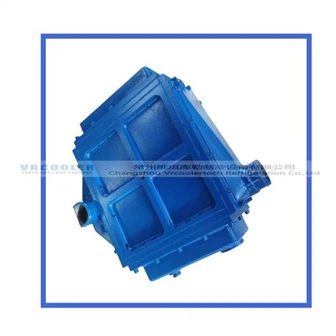
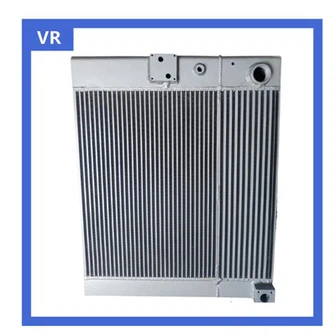
How To Repair Damaged Anti-Corrosion Coating Of Box Cooler?
Repair must be carried out in dry dock; the sea chest shall be fully drained, cleaned and ventilated with no residual seawater. Isolate the boxcooler tube bundle to avoid scratch or coating contamination.
Step 1: Full Surface Preparation (Critical Step)
Mark all peeling, chipped, scratched, blistered coating areas, extend the repair boundary at least 50 mm beyond damaged edges.
Strip all defective coating completely by power grinding or high-pressure fresh water jet.
Remove rust, corrosion products, marine sludge and salt deposits thoroughly.
Blast clean the exposed steel to Sa 2.5 standard, with uniform metallic grey surface, no residual rust or salt contamination.
Wipe the steel surface with solvent-free degreaser to eliminate oil and salt; air-dry completely.
Step 2: Edge Chamfer Treatment
Grind the edges of remaining intact coating into a smooth 30°–45° chamfer.
Purpose: Prevent new coating from peeling off at the junction between old and new paint layers.
Step 3: Apply Primer
Brush or spray approved marine anti-corrosion epoxy primer evenly on the treated bare steel.
Control dry film thickness (DFT) per paint specification, allow full curing time as manufacturer required.
Inspect for pinholes, missing coverage before next layer.
Step 4: Intermediate & Top Epoxy Coating
Apply intermediate epoxy coating after primer fully cured.
Apply top anti-corrosion epoxy lining (the same system as original sea chest coating).
Build up total DFT to match the original design thickness (normally ≥150μm for sea chest service).
Ensure seamless overlap between new coating and chamfered old coating area, no gaps or thin spots.

Step 5: Curing & Inspection
Keep the space dry, well ventilated during full curing period (avoid moisture, dew, seawater splash).
Conduct DFT thickness test, visual inspection for blisters, cracks, sagging or bare steel exposure.
Optional holiday spark test for critical deep repair areas to detect hidden pinholes.
Step 6: Post-Repair Matching Protection
Reinstall insulated gaskets, plastic bolt sleeves to maintain electrical isolation between boxcooler tube bundle and steel sea chest.
Check sacrificial zinc/aluminum anodes: replace severely consumed anodes after coating repair.
Calibrate ICAF system before re-launching vessel to rebalance potential difference.
Emergency Minor Touch-Up (Small Scratches Only)
For tiny coating damage less than 10 cm² without deep rust:
Hand sand clean rust and loose coating, degrease and dry.
One layer primer + one layer topcoat, follow short curing interval; no need for full blasting.
Key Notes to Avoid Secondary Galvanic Corrosion
Never leave any bare steel exposed after repair; incomplete coating will accelerate pitting.
Do not coat copper-nickel / aluminum brass tube bundles, only protect carbon steel frame and sea chest.
Do not use conductive graphite gasket after recoating; always adopt insulating non-conductive sealing parts.
Complete full repair in dry dock; temporary underwater patch cannot stop long-term galvanic corrosion.