How To Design Marine Air And Water Coolers
Determine the Cooling Requirements
Heat Load Calculation: Calculate the amount of heat that needs to be removed. This requires knowledge of the heat sources such as engines, generators, or other equipment the cooler will serve.
Temperature Specifications: Determine the desired inlet and outlet temperatures of the air and water. The temperature difference between the cooling medium (air or water) and the cooled fluid is a crucial factor in the heat transfer process. For marine air coolers, the typical air inlet temperature can range from 20 - 30°C, depending on the location and weather conditions. The outlet temperature of the cooled fluid (e.g., engine coolant) might be designed to be around 40 - 50°C.
Select the Cooling Medium and its Flow Rate
Air vs. Water: Consider the advantages and disadvantages of using air or water as the cooling medium. Air coolers are generally simpler and more reliable in terms of avoiding issues like leaks, but they may have a lower heat transfer coefficient compared to water coolers. Water coolers can provide more efficient cooling but require additional components such as pumps and may be more prone to corrosion and leakage.
Flow Rate Determination: Based on the heat load and the properties of the cooling medium, calculate the required flow rate.

Heat Exchanger Design
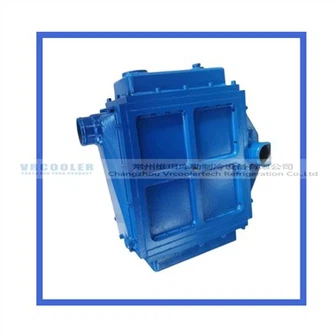
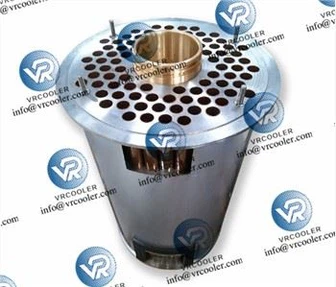
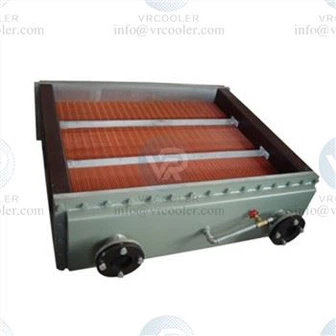
Type Selection: There are different types of heat exchangers such as shell - and - tube, plate - type, and fin - tube heat exchangers. For marine air and water coolers, fin - tube heat exchangers are commonly used. The fins on the tubes increase the surface area available for heat transfer, improving the efficiency of the cooler.
Tube and Fin Design:
Tube Material: Select a material that is suitable for the marine environment and can withstand the temperature and pressure of the fluids. Copper - nickel alloys are often used due to their good corrosion resistance in seawater and high thermal conductivity.
Fin Material and Geometry: Aluminum fins are a popular choice because of their lightweight and good heat transfer properties. The fin geometry, including the fin height, thickness, and spacing, should be optimized to maximize heat transfer while minimizing pressure drop. The fin pitch (distance between adjacent fins) can range from 2 - 5 mm, depending on the application.
Tube Arrangement: Tubes can be arranged in a staggered or in - line pattern. Staggered arrangements generally provide better heat transfer but may have a higher pressure drop. The tube diameter is also an important parameter and can range from 10 - 30 mm, depending on the flow rate and pressure requirements.
Consider the Marine Environment
Corrosion Protection: Since marine environments are highly corrosive, the cooler must be protected against corrosion. This can involve the use of corrosion - resistant materials, coatings such as epoxy or zinc - based coatings, and proper maintenance procedures. Sacrificial anodes can also be installed to protect the heat exchanger from galvanic corrosion.
Vibration and Shock Resistance: The cooler should be designed to withstand the vibrations and shocks that occur during the operation of the marine vessel. This may require the use of flexible mounts, shock absorbers, and reinforced structures to prevent damage to the cooler and its components.

Pressure Drop and Fan/Pump Selection
Pressure Drop Calculation: Calculate the pressure drop across the heat exchanger for both the air and water sides. The pressure drop affects the performance of the fan (for air - cooled systems) or the pump (for water - cooled systems). Excessive pressure drop can lead to reduced flow rates and inefficient cooling. The pressure drop can be estimated using empirical correlations or computational fluid dynamics (CFD) simulations.
Control and Monitoring System
Temperature Control: Install temperature sensors to monitor the inlet and outlet temperatures of the air and water. A control system can adjust the flow rate of the cooling medium (by varying the speed of the fan or pump) or the operation of other components to maintain the desired cooling temperature.
Pressure Monitoring: Pressure sensors can be used to monitor the pressure drop across the heat exchanger. If the pressure drop exceeds a certain limit, it can trigger an alarm or take corrective actions such as cleaning the heat exchanger or checking for blockages.