Fins-Tube Heat Exchanger In Air Compressor As Aftercooler
Fins-Tube Heat Exchanger In Air Compressor As Aftercooler
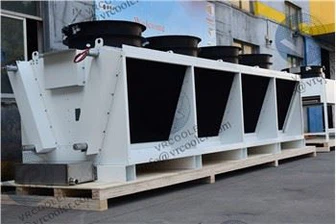
The fin - tube heat exchanger used as an aftercooler in an air compressor serves to cool the hot compressed air coming out of the compressor. Compressed air gets heated due to the work done during the compression process. For example, in a reciprocating air compressor, the air temperature can rise significantly, sometimes up to 200 - 300°C depending on the compression ratio. The aftercooler reduces this temperature to a more manageable level, usually close to ambient temperature plus a few degrees (around 40 - 50°C in many cases).
By cooling the compressed air, it also helps in removing moisture. As the air cools, water vapor in the air condenses into liquid water, which can then be separated from the air stream. This is crucial for many applications where dry air is required, such as in pneumatic tools, industrial drying processes, and some manufacturing operations.
Tube Design:
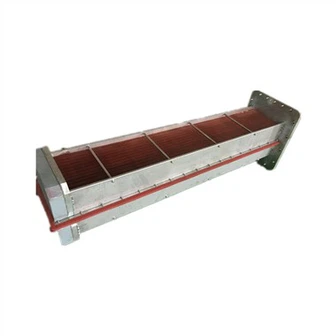
The tubes are usually made of materials with good thermal conductivity such as copper or copper - nickel alloys. Copper has a high thermal conductivity of about 385 - 401 W/(m·K), allowing for efficient heat transfer from the hot compressed air inside the tubes to the outside. The tube diameter can vary depending on the flow rate of the compressed air, but common diameters range from 10 - 20 mm.
The tubes are often arranged in a staggered or in - line pattern. Staggered arrangements provide a more turbulent flow of the cooling medium (usually air) around the tubes, which enhances heat transfer. However, they also result in a slightly higher pressure drop compared to in - line arrangements.
Fin Design:
Fins are attached to the outside of the tubes to increase the surface area available for heat transfer. Aluminum fins are commonly used due to their lightweight and good thermal conductivity (about 205 - 237 W/(m·K)). The fin geometry is carefully designed to optimize heat transfer. The fin height can range from a few millimeters to several centimeters, and the fin pitch (distance between adjacent fins) is usually between 2 - 5 mm. A proper fin pitch helps in allowing sufficient air to flow through the fins while maximizing the contact area with the air for heat transfer.
The fins are usually in a plate - fin or circular - fin configuration. Plate - fin heat exchangers have flat fins that are more suitable for applications where space is a concern and a more compact design is needed. Circular - fin heat exchangers have fins that wrap around the tubes and can provide more uniform heat transfer around the tube circumference.