How To Design An Air Compressor Intercooler
How to Design an Air Compressor Intercooler
To design an effective air compressor intercooler, several key steps and considerations need to be taken into account:
Thermal Analysis:
Determine the amount of heat that needs to be removed from the compressed air. This depends on the compression ratio, inlet and outlet temperatures, and the mass flow rate of the air.
Use thermodynamic equations and software tools to calculate the heat load accurately.
Heat Exchanger Type Selection:
Common types include fin tube, plate, and shell and tube heat exchangers.
Fin tube heat exchangers are suitable for moderate heat transfer requirements and are relatively easy to manufacture.
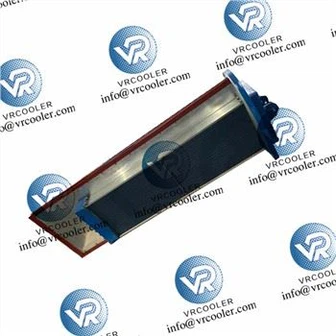
Plate heat exchangers offer high heat transfer efficiency in a compact size but may have limitations in pressure and temperature capabilities.
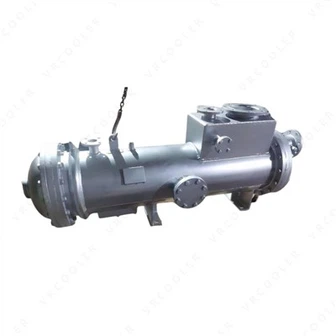
Shell and tube heat exchangers are often chosen for large-scale applications with high pressure and temperature conditions.
Material Selection:
Consider materials that are resistant to corrosion from the coolant and the compressed air.
Stainless steel, copper alloys, or special alloys may be used depending on the operating environment.
The material should also have sufficient mechanical strength to withstand the internal pressures.
Flow Configuration:
Decide on the flow arrangement of the coolant and the compressed air to optimize heat transfer.
Counter-flow configuration generally provides better heat transfer compared to parallel flow.

Surface Area Optimization:
Increase the surface area of the heat exchanger to enhance heat transfer.
This can be achieved through the use of fins, multiple plates, or longer tubes.
Pressure Drop Minimization:
Design the intercooler to minimize pressure drop across it.
Use appropriate tube diameters, fin geometries, and flow channels to reduce resistance.
Coolant Selection:
Choose the coolant based on its heat transfer properties, availability, and cost.
Water is commonly used due to its high heat capacity but may require additional treatment to prevent scaling and corrosion.
Mechanical Design and Mounting:
Ensure the intercooler is structurally sound and can be securely mounted in the compressor system.
Consider vibration and shock loads during operation.
For example, in a small-scale industrial air compressor, a plate heat exchanger made of stainless steel with a counter-flow configuration and a suitable coolant such as treated water could be selected. The number of plates and the fin geometry would be optimized based on the calculated heat load and pressure drop limitations.
In a large-scale application, a shell and tube intercooler with copper tubes and a high-performance coolant might be preferred. The tube diameter and length, as well as the shell size, would be determined to meet the demanding heat transfer and pressure requirements.
Careful attention to these design aspects will result in an efficient and reliable air compressor intercooler that improves the performance and longevity of the overall compression system.