How To Design An Air Compressor Cooler
How to Design an Air Compressor Cooler
The following are some key points and steps in designing an air compressor cooler:
Heat load calculation: Determine the amount of heat to be removed, taking into account factors such as the power of the air compressor, the compression ratio, and the working cycle.
Cooling medium selection: Air and water are common. Water cooling is usually more efficient, but you need to consider water quality treatment and corrosion prevention and other issues; air cooling is relatively simple.
Structure form:
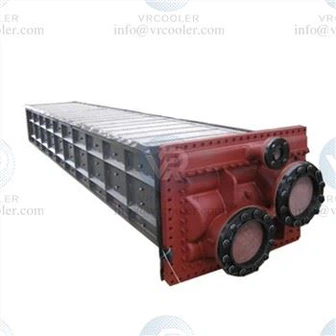
Shell and tube type: composed of shell and heat exchanger tube, can be designed as single or multi-pass.

Heat exchanger tube design:
Select the appropriate material, such as copper tube, stainless steel tube.
Determine the tube diameter, tube length and tube spacing.
Shell design: Consider strength, sealing and ease of installation.
Fluid channel design: Ensure that the cooling medium and the cooled gas have a reasonable flow path to achieve good heat transfer.
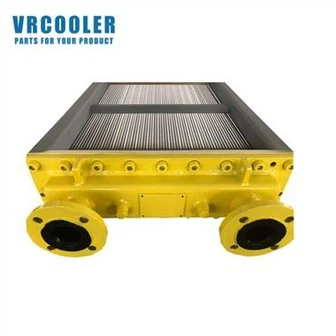
Fin design (if any): If heat exchanger tubes with fins are used, design appropriate fin shapes, sizes and spacing to increase the heat exchange area.
Seal design: prevent leakage of cooling medium.
Pressure loss consideration: minimise the pressure loss when the fluid flows through the cooler.
Installation and maintenance design: to facilitate installation, disassembly and routine maintenance.
For example, in the design of shell and tube cooler, according to the heat load calculation to determine the number and size of heat exchanger tubes, reasonably arranged in the shell. The location of the water inlet and outlet should be conducive to the uniform distribution of water. For large air compressor cooler, may also need to consider the sub-area design to improve the heat transfer effect.