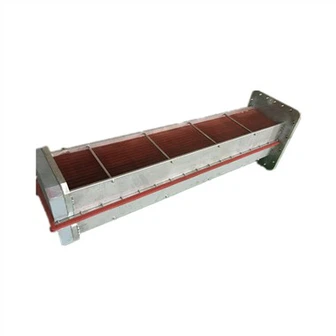
How To Design Air Cooler In Inter Cooler Of Compressor?
How To Design Air Cooler In Inter Cooler Of Compressor
Designing an air cooler in the intercooler of a compressor involves several key considerations to ensure optimal efficiency and performance.
Here's a structured approach to the design process:
1. Define Requirements
Cooling Capacity: Determine the required cooling capacity based on the compressor specifications and the desired temperature drop.
Airflow Rate: Calculate the airflow rate needed to achieve the required cooling. This is often based on the compressor's intake conditions and the expected output.
2. Select the Type of Intercooler
Air-to-Air Intercooler: Uses ambient air to cool the compressed air.
Air-to-Water Intercooler: Uses water (either chilled water or cooling water) for better heat transfer efficiency, typically requiring a water supply.
3. Design Parameters
Heat Exchange Area: Calculate the required surface area for heat exchange using heat transfer equations.
Material Selection: Choose materials that can withstand operating conditions (temperature, pressure) and have good thermal conductivity (e.g., aluminum, copper).
4. Flow Configuration
Counterflow vs. Crossflow:
Counterflow: The cooling medium flows in the opposite direction to the compressed air, typically providing higher efficiency.
Crossflow: The cooling medium flows perpendicular to the compressed air, which may be simpler to design but less efficient.
5. Design the Cooling Circuit
Inlet and Outlet Connections: Design the inlet and outlet connections for both the compressed air and cooling medium, ensuring minimal pressure drop.
Baffles and Fins: If using an air-to-air intercooler, incorporate fins or baffles to enhance surface area and improve heat transfer.
6. Thermal and Fluid Dynamics Analysis
Conduct simulations (CFD analysis) to evaluate airflow patterns, temperature distribution, and pressure drops within the intercooler. This can help optimize the design for efficiency and performance.
7. Size and Optimize
Physical Dimensions: Based on the calculated heat exchange area, determine the physical dimensions of the cooler.
Weight Considerations: Ensure that the design is not overly heavy, especially for mobile applications such as vehicles.
8. Safety and Compliance
Pressure Ratings: Ensure that the intercooler is designed to operate safely within the maximum pressure ratings of the compressor system.
Regulatory Standards: Comply with relevant industry standards and regulations regarding pressure vessels and heat exchangers.
9. Prototype and Testing
Build a Prototype: Construct a prototype of the intercooler for testing.
Performance Testing: Perform tests to assess cooling performance under various operating conditions and make adjustments as necessary.
10. Final Design and Implementation
After successful testing and validation, finalize the design for production.
Implement the intercooler into the overall compressor system, ensuring proper integration with existing components.