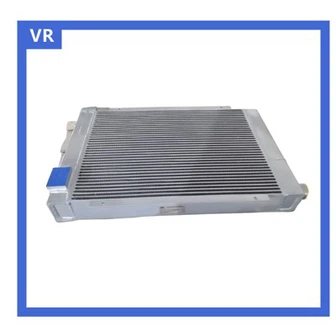
How To Choose The Right Inter Cooler For Your Air Compressor?
Choosing the right intercooler for your air compressor is a critical decision that directly impacts the machine's energy efficiency, reliability, and the quality of your final compressed air. Unlike standard coolers, an intercooler has a unique job: it removes the heat of compression between stages in a multi-stage compressor, ensuring the air is cooler and denser before entering the next stage.
1. Prioritize Low Pressure Drop (The #1 Rule)
For an intercooler, minimizing pressure drop is often more important than maximizing cooling.
The Cost of Resistance: Any pressure lost in the intercooler must be compensated for by the next compressor stage, which directly increases energy consumption. High pressure drop negates the efficiency gains from cooling.
The Target: Look for designs that keep air-side pressure drop below 5% of the absolute inlet pressure. High-performance fin-tube coolers are specifically known for creating a good balance between heat transfer and low resistance.
2. Match the Cooler Type to Your Compressor
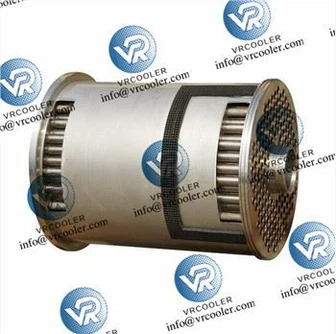
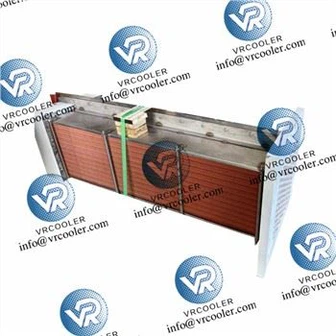
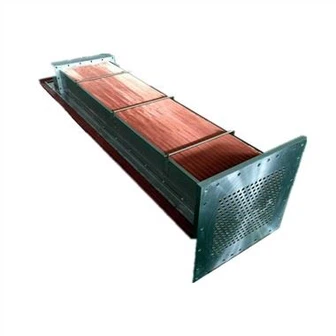
While shell-and-tube coolers are common, fin-tube designs are often superior for air compression.
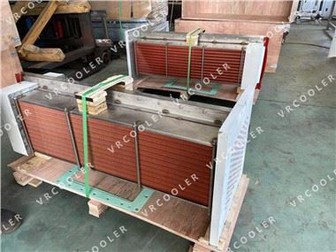
Our Recommendation: For most industrial applications, start with a fin-tube intercooler. It is specifically designed to cool air efficiently without robbing pressure. Reserve shell & tube for very high pressures or when you expect significant fouling.
3. Define Your Critical Performance Data
Before contacting a supplier, have these four key parameters ready. They are the non-negotiable inputs for proper sizing:
Flow Rate & Pressure: The compressor's capacity (Nm³/h or CFM) and operating pressure (PSI or bar).
Inlet & Outlet Temperature: The hot air temperature exiting the first stage (often 150°C/300°F) and your target temperature entering the second stage (ideally 38-50°C/100-120°F).
Cooling Medium: The temperature and flow rate of your available cooling water (or ambient air for air-cooled units).
Relative Humidity: This is a critical factor. As air cools in the intercooler, water vapor will condense. Your cooler must have a built-in moisture separator and drain to remove this liquid, preventing corrosion and water hammer in the next stage.
4. Select Materials for Longevity
The combination of high heat, pressure, and condensing water creates a corrosive environment.
Tubes: Copper is the standard for excellent heat transfer. Stainless steel (316L) is better for corrosion resistance and high temperatures, though it is less thermally conductive. For high humidity or marine environments, specify Cu-Ni (Copper-Nickel) or Titanium to prevent stress cracking.
Fins (for fin-tube type): Aluminum is efficient and cost-effective. However, if you have corrosive gases or high humidity, Copper fins are more durable.
5. Plan for Moisture Removal
This is a feature, not an option. An intercooler is also a dehumidifier.
The Problem: Hot compressed air holds a lot of water vapor. When it cools, that vapor turns into liquid water.
The Solution: Ensure the cooler you choose is designed as a combined unit (cooler + separator) or that a dedicated separator is installed immediately after the cooler. This water must be automatically drained to prevent damage to the second-stage valves and cylinders.
6. Do Not Ignore Thermal Expansion
Intercoolers experience extreme temperature changes during startup and shutdown, creating significant mechanical stress.
The Risk: If a cooler's tube bundle is rigidly fixed at both ends, the expanding tubes can buckle or tear away from the tube sheet, causing a leak.
The Solution: For large or high-temperature units, look for designs that accommodate this stress. A U-tube bundle or a floating head design allows the tubes to expand and contract freely without breaking.
To make your final decision, run through this checklist:
Efficiency: Have I prioritized a design with low pressure drop (like fin-tube)?
Water: Does the unit include an integrated moisture separator and drain?
Materials: Are the materials (tubes/fins/shell) compatible with my environment (humidity, chemicals)?
Maintenance: Can the unit be easily opened and cleaned if my cooling water is "dirty"?
Stress: Does the design manage thermal expansion properly (floating head/U-tube)?