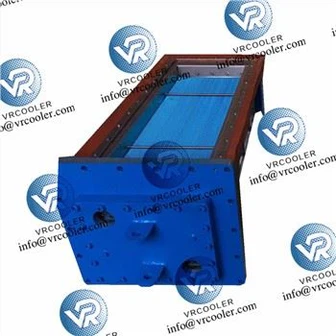
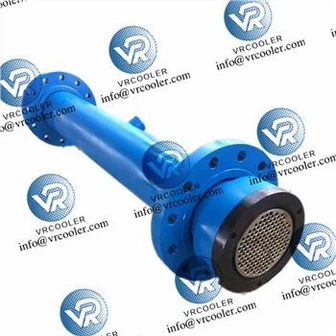
How Does Generator Cooler Reliability Impact Plant Availability?

1. Immediate Effect on Generator Loading
The generator's allowable output is governed by winding and core temperature limits. When cooler performance degrades due to fouling, leakage, or flow restriction:
Stator and rotor temperatures rise rapidly
Protection systems enforce load reduction
In severe cases, the generator trips
Result: Even a partially degraded cooler can force derating within hours, directly reducing plant availability.
2. Forced Outages from Cooler Failures
Typical failure modes include:
Tube leaks allowing water ingress
Hydrogen leakage in hydrogen-cooled generators
Internal fouling or blockage
Mechanical damage during operation or maintenance
Any of these can require:
Immediate unit shutdown
Hydrogen purging and drying
Extended repair and recommissioning time
Result: Forced outages with high equivalent forced outage rate (EFOR).
3. Safety-Driven Shutdowns
In hydrogen-cooled generators, cooler reliability is also a safety requirement:
Water leakage into hydrogen creates explosion risk
Hydrogen leakage reduces cooling effectiveness and seal integrity
Protection logic is conservative by design, so even small anomalies trigger alarms and trips.
Result: Availability is sacrificed to protect personnel and equipment.
4. Impact on Maintenance Strategy and Outage Duration
Reliable coolers:
Maintain stable performance between major outages
Reduce the need for unplanned inspections
Allow cooler maintenance to be aligned with scheduled outages
Unreliable coolers:
Increase corrective maintenance
Extend outage durations
Consume contingency time in overhaul windows
Result: Lower equivalent availability factor (EAF).
5. Cumulative Thermal Damage and Long-Term Availability
Chronic marginal cooling causes:
Accelerated insulation aging
Increased vibration due to uneven thermal expansion
Higher risk of winding failure over time
Even if trips are avoided initially, long-term reliability deteriorates.
Result: Reduced lifetime availability and higher forced outage probability in later years.
6. Redundancy Effectiveness Depends on Cooler Reliability
Large generators often use multiple coolers in parallel to allow:
One cooler to be isolated while others remain in service
However:
Poor overall cooler reliability reduces usable redundancy
Fouling or leakage in multiple coolers simultaneously defeats the redundancy concept
Result: Nominal redundancy does not translate into real availability.
7. Economic Impact of Availability Loss
For large power units:
One hour of forced outage can represent hundreds of thousands of dollars in lost generation and penalties
Repeated derating events erode dispatch priority
Result: Cooler reliability has a direct financial impact well beyond maintenance cost.
Summary: Reliability–Availability Link
| Aspect | Impact on Availability |
|---|---|
| Heat transfer degradation | Load derating |
| Leakage (water or hydrogen) | Immediate shutdown |
| Fouling | Higher forced outage risk |
| Poor materials/sealing | Reduced overhaul intervals |
| Strong cooler reliability | Sustained base-load operation |