How Does A Heat Exchanger Work On A Boat Engine?
Marine engine heat exchangers are liquid-to-liquid cooling devices, widely used for closed freshwater cooling systems on yachts, workboats and commercial vessels.
Two separate fluid circuits (no mixing)
Inner circuit: Fresh coolant Circulates inside the engine block, cylinder head and turbocharger. It absorbs waste heat generated by combustion and friction.
Outer circuit: Raw seawater / brackish water Pulled from outside the boat via a raw water pump. This is the cooling medium to carry heat away. The two liquids flow through isolated channels and never come into direct contact.
Heat transfer principle Hot freshwater flows on one side of metal plates or tube bundles; cold seawater flows on the other side. Heat naturally transfers through the metal partition (conductive heat transfer) from the hotter coolant to the cooler seawater. Most marine heat exchangers adopt counter-flow design for maximum cooling efficiency.
Fluid circulation workflow
Engine thermostat opens when coolant reaches operating temperature.
Hot freshwater enters the heat exchanger.
Raw water pump feeds cold seawater into the heat exchanger shell/tank.
Heat transfers across tube walls; freshwater cools down and returns back to the engine.
Warmed seawater exits the heat exchanger and is discharged overboard.
Key advantages for marine engines
✅ Freshwater protects engine castings from corrosion (avoids pumping seawater directly through engine internals)
✅ Stable operating temperature, less thermal stress
✅ Compatible with main engines, auxiliary generators and turbo charge air coolers
Common matched equipment on vessels
Main engine heat exchanger
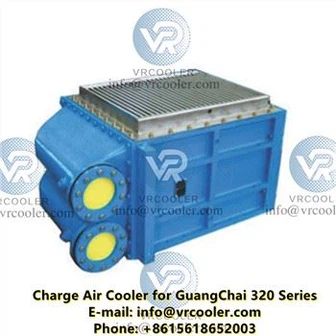
Charge air cooler (aftercooler) for turbocharged marine engines
Gearbox oil cooler, hydraulic oil cooler