High And Low Temperature Dry Coolers in Power Plants
High and Low Temperature Dry Coolers in Power Plants
High and low temperature dry coolers have a variety of important uses in power plants, mainly including the following:
Turbine Exhaust Steam Cooling:
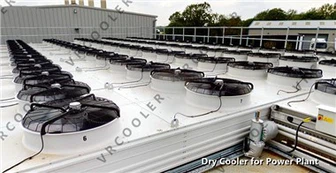
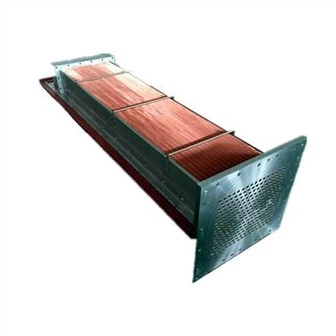
Direct air cooling system: In power plants in water-scarce areas, direct air cooling technology is widely used. The high and low temperature dry cooler can directly cool the steam discharged from the turbine, so that the steam can be cooled and recovered by exchanging heat with air in devices such as finned tube radiators, condensing the steam into water. This method does not require a large amount of water as a cooling medium, saving water, and is particularly suitable for northern regions where water resources are scarce.
Indirect air-cooling system: In the indirect air-cooling system, the high and low temperature dry cooler first cools the hot water after a heat exchange between the turbine exhaust steam and cooling water. After the cooling water exchanges heat with the turbine exhaust steam in the surface condenser, it is transported to the dry cooler to lower the temperature through heat exchange with air, and then circulated back to the condenser for further use, thus realizing indirect cooling of the turbine exhaust steam.
Auxiliary Equipment Cooling:
Bearing cooling: the bearings of various rotating machines in the power plant, such as generators, pumps, fans, etc., generate a lot of heat due to friction during operation. The high and low temperature dry cooler can cool these bearings to prevent the bearings from being damaged due to high temperature and ensure the normal operation of the equipment. For example, the cooling medium is transported to the bearings through pipelines, absorbs heat and then enters the dry cooler for cooling, and the cooled medium is circulated back to the bearings for further cooling.
Motor cooling: Generators and various motors generate heat due to iron and copper losses during operation. The high and low temperature dry cooler can cool the motor through the cooling medium to reduce the temperature of the motor and improve the efficiency and service life of the motor. The cooling medium can be water or other coolant, after the motor absorbs heat, it enters into the dry cooler and exchanges heat with air, and the cooled medium is then recycled back to the motor.
Oil cooling: Some equipments in the power plant need to use lubricating oil or hydraulic oil to ensure the normal operation of the equipments, such as the speed control system of the turbine, the cooling system of the transformer and so on. The temperature of these oils will rise due to friction and heat in the process of use, and they need to be cooled. High and low temperature dry coolers can cool these oils to ensure the performance of the oil and the normal operation of the equipment.
Cooling and Pre-cooling of Other Equipment:
Instrumentation and control system cooling: Various instrumentation and control systems in power plants have strict requirements on temperature, and excessive temperature will affect their accuracy and reliability. High and low temperature dry coolers can provide cooling for these instruments and control systems to ensure their normal operation. For example, the electronic equipment and instrument panels in the control room can be cooled to prevent failure due to high temperature.
Flue gas pre-cooling: In the flue gas treatment system of some power plants, high temperature flue gas needs to be pre-cooled for subsequent treatment and discharge. High and low temperature dry cooler can be used as the equipment for flue gas pre-cooling to reduce the temperature of the flue gas through heat exchange with the flue gas, so as to reduce the load and energy consumption of the subsequent treatment equipment. For example, in dry desulphurisation systems, pre-cooling of the flue gas is required to improve desulphurisation efficiency and reduce equipment corrosion.