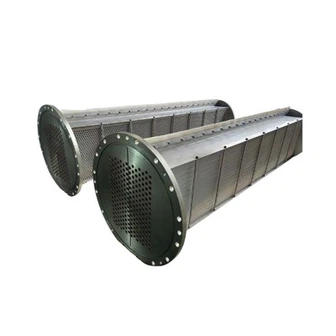
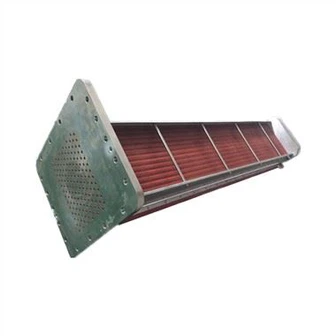
High And Low Temperature Dry Coolers For Heat Dispersion in Power Plants
High and Low Temperature Dry Coolers for Heat Dispersion in Power Plants
Conventional power plants often use wet cooling systems, where water is circulated to cool heat-generating equipment such as boilers or turbines.
However, wet cooling systems require large amounts of water and can cause water vapour emissions that hurt the environment.
In contrast, a high and low temperature dry cooler is a more environmentally friendly and energy efficient option. It utilises large radiators to pull heat away from the power generation plant without the use of water. The system uses air as the cooling medium and transfers heat to the environment by creating a heat exchange between the high and low temperature sides. On the high-temperature side, a heat exchanger absorbs heat from the power generating equipment and then transfers it via a fan to a radiator on the low-temperature side. The radiators on the low-temperature side again use fans to dissipate the heat to the atmosphere.

Advantages of high and low temperature dry coolers include:
Water saving: compared with traditional wet cooling systems, high and low temperature dry coolers do not require a large amount of water resources, which can reduce the dependence on water resources, especially suitable for water-scarce areas.
Environmentally friendly: The high and low temperature dry cooler reduces water vapour emissions, which has a lower impact on the environment. It also reduces the negative impact on the water ecosystem.
Energy efficient: The HLT dry cooler improves the thermal efficiency of the power plant and reduces energy consumption by utilizing air for heat exchange.