Features And Advantages Of Shell And Tube Heat Exchanger
Features and Advantages of Shell and Tube Heat Exchanger
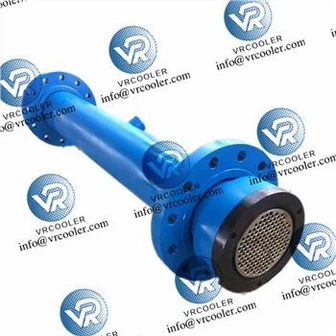
Shell and Tube Heat Exchanger (Shell and Tube Heat Exchanger) is a common type of heat exchange equipment used for heat transfer and energy recovery. It consists of a shell (Shell) and several tubes (Tube), through the heat transfer between the shell side and the tube side, to achieve the exchange of heat between different media.
The working principle of Shell and Tube heat exchanger is as follows:
Liquid or gas flows through the tube (inner tube) through the tube side of the heat exchanger and is heated or cooled.
At the same time, another medium flows through the outer shell (shell side) around the tubes and exchanges heat with the medium on the tube side.
Heat is transferred from the hot side (tube side) to the cold side (shell side) by conduction through the tube wall.
The flow path and structural design of the two media inside the shell-and-tube heat exchanger, as well as the heat transfer, affect the heat exchange efficiency and heat transfer performance.

Features and advantages of shell and tube heat exchangers include:
High heat transfer efficiency: Shell and tube heat exchangers have a large heat transfer area, resulting in high heat transfer efficiency.
Reliability and stability: The shell and tube heat exchanger structure is simple, not easy to damage, with high reliability and stability.
Strong adaptability: shell and tube heat exchanger is suitable for a variety of working conditions and media, can be a variety of forms of heat exchange, such as convection, convection and phase change.
Easy to maintain and clean: Shell and tube heat exchanger tubes and shell can be separated, easy to maintain and clean, reduce the risk of scale accumulation and clogging.
High corrosion resistance: Different materials can be selected according to the characteristics of the medium to improve the corrosion resistance of the shell and tube heat exchanger.
Expandability: Shell and tube heat exchangers can be adapted to different heat transfer requirements by increasing or decreasing the number of tubes and adjusting the heat transfer area.
High-pressure and high-temperature applications: Shell and tube heat exchangers are suitable for high-pressure and high-temperature process applications, and are capable of stable operation under high operating conditions.

Shell and tube heat exchangers are widely used in industrial fields, including chemical, petroleum, pharmaceutical, food processing, and electric power industries, for heat exchange processes such as cooling, heating, evaporation, condensation, and recovery of waste heat.