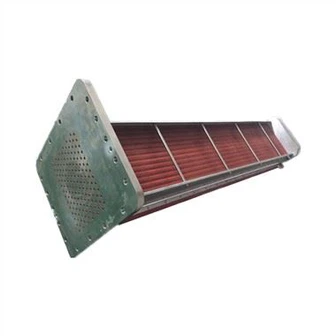
High And Low Temperature Dry Coolers For Automotive Electric Drive
1, Core positioning and role
Core positioning: The "temperature control center" for electric drive thermal management, providing a wide temperature range of * * -40 ℃~150 ℃ * * and high-precision circulating cooling/heating medium (water cooling/oil cooling) for electric drive systems.
core function
Extreme condition simulation: Reproduce scenarios such as extreme cold (-40 ℃), high temperature (140 ℃+), and rapid temperature changes to verify the cold start, sustained high-power output, thermal degradation, and low-temperature performance of electric drive.
Thermal characteristic testing: Conduct tests on electric drive heat dissipation efficiency, thermal inertia, flow resistance pressure drop, and temperature uniformity to support the design and optimization of thermal management systems.
Reliability verification: Evaluate the durability of electric drive materials, seals, insulation, and structures through high and low temperature cycling, wet heat, and thermal shock.
Performance calibration: Match the optimal operating temperature of the motor/electrical control (motor winding<150 ℃, IGBT<175 ℃), calibrate the thermal management control strategy.
2, Working principle and system architecture
1. Basic principles
Adopting a dual circuit/stacked system with compressor refrigeration, electric heating coupling, and precise temperature control:
Refrigeration: The vortex/cascade compressor drives the circulation of refrigerant and cools the circulating medium (ethylene glycol antifreeze/insulation cooling oil) through a plate heat exchanger.
Heating: Equipped with a built-in electric heater for rapid temperature rise, coupled with a thermal inertia compensation algorithm, it can achieve fast switching from -40 ℃ to 150 ℃ (up to about 23 minutes).
Temperature control: Dual PID adaptive control+multi-point temperature/pressure sensing, temperature control accuracy of * * ± 0.5 ℃, flow accuracy of ± 0.2L/min * *.
2. Typical architecture (suitable for electric drive)
Medium circuit
Water cooling type: deionized water+ethylene glycol, compatible with motor water cooling sleeve, electric control cold plate, compatible with 800V high voltage platform.
Oil cooled type: Special insulation cooling oil (ATF), directly sprayed to cool the motor winding/rotor, with higher heat dissipation efficiency and better insulation.
Core components: compressor, condenser, evaporator, electric heater, plate heat exchanger, variable frequency pump, expansion tank, sensor group, controller (RS485/CAN communication).

3, Typical application scenarios in electric drive testing
Motor performance testing
Low temperature cold start: Verification of motor starting torque, efficiency, and insulation performance at -30 ℃~-40 ℃.
Continuous high power: Test the thermal stability, demagnetization risk, and continuous output capability of the motor under 120 ℃+operating conditions.
Thermal shock: rapid thermal cycling (such as 140 ℃ → -40 ℃), assessing the reliability of materials and structures.
Electrical control (inverter) testing
Thermal characteristics of IGBT/SiC devices: testing switch losses, efficiency, and lifespan at different junction temperatures.
High voltage insulation: Verify the electrical insulation withstand voltage and creepage distance clutch compliance at high and low temperatures.
Electric drive assembly (three in one) thermal management matching
Jointly test the thermal interaction of motors, electronic controls, and reducers, optimize the layout of cooling circuits and flow distribution.
Waste heat recovery verification: Simulate the system efficiency of heating the battery/cabin with waste heat from the winter motor.
Joint debugging of bench and vehicle thermal management
Coordinate with the vehicle thermal management system (heat pump, PTC, radiator) to calibrate the control logic and strategy.
4 Technical advantages and selection points
1. Core advantages
Wide temperature range+high precision: meets the testing requirements of the entire lifecycle of electric drives.
Rapid temperature change: significantly shorten the development cycle and improve testing efficiency.
Compatible with multiple media: water-cooling/oil cooling universal, suitable for different electric drive cooling schemes.
Intelligent control: supports remote monitoring, data collection, and automated testing.
2. Selection key
Select water-cooled/oil cooled models according to the electric drive cooling type.
Match the flow rate and cooling/heating capacity according to the electric drive power.
Confirm the temperature range, accuracy, and temperature change rate according to the testing standards.
Prioritize the use of cascade refrigeration and thermal inertia compensation solutions to enhance deep cooling and rapid switching capabilities.