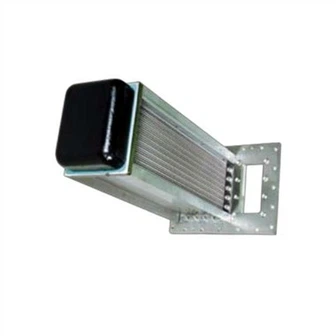
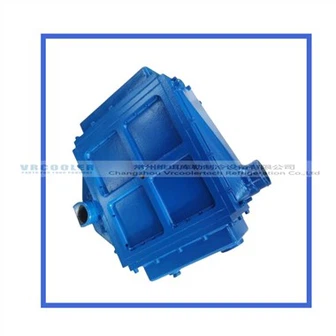
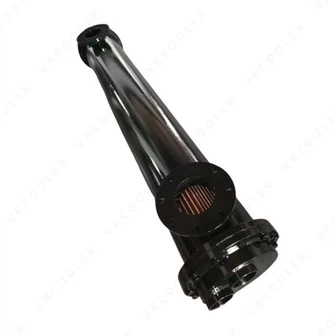
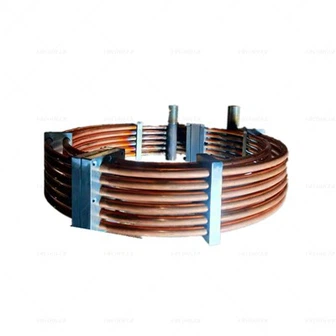
Heat recovery heat exchangers are used for blast furnace flue gas recovery to provide heating for the plant area.
The core of waste heat recovery and heating from blast furnace flue gas is to capture the sensible and latent heat in the flue gas through scientific and technological means. After purification, heat exchange, and storage, the waste heat energy is converted into a stable heating source, achieving the energy cycle of "turning waste into treasure". Unlike traditional coal-fired and gas-fired heating models, this approach focuses on industrial waste heat as its core, without the need for additional consumption of fossil fuels. It reduces energy waste and pollutant emissions, perfectly meeting the core needs of industrial green development under the "dual carbon" goal.
The efficient operation of the blast furnace flue gas heat recovery heating system relies on a complete technical system. Its core process can be divided into five major links: flue gas collection, purification treatment, waste heat exchange, heat storage regulation, and heating transportation. Each link works together to ensure the efficiency, stability, and safety of waste heat recovery. In the flue gas collection process, the system introduces the high-temperature flue gas (usually 150-300 ℃) discharged from the blast furnace exhaust outlet into the waste heat collector through the flue gas induced draft fan. The collector often uses finned tube heat exchangers, which increase the heat exchange area and improve the waste heat capture efficiency with their dense finned structure. At the same time, temperature sensors are equipped to monitor the flue gas temperature in real time, providing data support for subsequent regulation.
Due to the presence of a large amount of dust (including Fe ₂ O3, SiO ₂, etc.), harmful gases (such as SO ₂, NO ₓ), and moisture in blast furnace flue gas, if it directly enters the heat exchange system, it will cause pipeline blockage, corrosion, and reduce equipment service life. Therefore, purification treatment is crucial. A complete set of waste heat purification modules usually includes ceramic filtration units, activated carbon adsorption units, and hydrophobic membrane dehydration units connected in series. The ceramic filtration unit can effectively remove dust from the flue gas, the activated carbon adsorption unit adsorbs harmful gases, and the hydrophobic membrane dehydration unit separates moisture from the flue gas. After triple purification, the flue gas can effectively avoid damage to subsequent equipment, extend the service life of the system, and ensure the safety of heating.
Waste heat exchange is the core link of the entire system, and its principle revolves around "efficient capture of waste heat and precise heat transfer", following the three major heat transfer laws of heat conduction, heat convection, and heat radiation. The current mainstream heat exchange method adopts wall to wall heat exchange, which transfers the heat in the flue gas to the circulating water through a heat exchanger, achieving energy conversion of "flue gas cooling and water heating" - the high-temperature flue gas flows through the shell side of the heat exchanger, and the circulating water flows in the opposite direction to the flue gas in the tube side, always maintaining a large temperature difference (average temperature difference of 40-80 ℃), maximizing heat exchange efficiency. For example, a low-temperature flue gas heat exchanger using low dimensional carbon based composite material high thermal conductivity pipes not only has corrosion resistance and reduced resistance, but also efficiently recovers low-temperature flue gas waste heat around 145 ℃, fully tapping into the potential of waste heat.

Considering that the temperature of blast furnace flue gas is affected by factors such as smelting load and raw material composition, the fluctuation amplitude is large, which can easily lead to unstable temperature of the heating medium. Therefore, the heat storage regulation link becomes the key to ensuring heating stability. The application of medium temperature phase change thermal storage devices effectively solves this problem. The device uses phase change materials such as aluminum silicon alloy as the core, fills the interior of the thermal storage tank, and embeds metal fins to enhance heat transfer. By utilizing the high-density thermal storage characteristics of phase change materials, it achieves stable storage and on-demand release of waste heat. When the residual heat of the flue gas is sufficient, the phase change material absorbs heat and solidifies; When there is insufficient waste heat or an increase in heating demand, phase change materials release heat to ensure stable temperature in the heating network. In addition, the intelligent control module monitors parameters such as flue gas temperature, circulating water flow rate, and phase change material temperature in real time through a PLC controller, dynamically adjusts the working status of the induced draft fan and circulating pump, achieves intelligent operation and maintenance of the system, and further improves energy utilization efficiency.
Currently, with the deepening of the concept of industrial green development, the technology of blast furnace flue gas heat recovery heating is also constantly innovating and upgrading. The application of new materials (such as graphene reinforced composite pipes) further improves heat transfer efficiency, the integration of digital twin technology enables real-time monitoring and fault warning of equipment operation, and the coupling of heat pump technology and thermal storage devices further explores the potential for the utilization of medium and low temperature waste heat. In the future, with the continuous improvement of technology, the blast furnace flue gas heat recovery heating system will be more efficient, intelligent, and stable. It can not only be applied to steel plant areas, but also expanded to surrounding community heating, realizing the coordinated utilization of energy between the plant area and the city, and opening up broader space for the resource utilization of industrial waste heat.
Industrial waste heat is a hidden 'green treasure', and the use of blast furnace flue gas heat recovery for plant heating is not only an efficient utilization of energy, but also a concrete practice for enterprises to fulfill social responsibilities and promote green and low-carbon development. Under the guidance of the "dual carbon" goal, more and more steel companies will increase their efforts in waste heat recovery and utilization, solve the problem of energy waste through technological innovation, transform blast furnace flue gas from "waste gas" to "warm current", inject new momentum into industrial green transformation, and achieve a win-win situation of economic, environmental and social benefits.