Heat Recovery Heat Exchanger For Hot Water Application After Multi Fuel Engines
Heat Recovery Heat Exchanger for Hot Water Application After Multi Fuel Engines
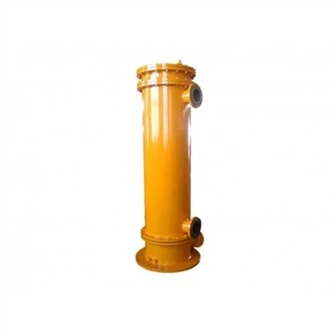
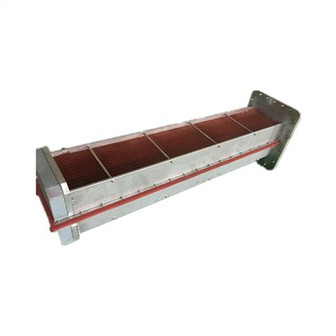
Heat Recovery Heat Exchanger for Hot Water Applications After Multi-Fuel Engines is a specialized thermal device designed to capture waste heat from the exhaust gases of multi-fuel engines (which run on diverse fuels like diesel, natural gas, biogas, or gasoline) and transfer this heat to cold water, converting it into usable hot water. This system not only reduces energy waste and operational costs but also lowers the engine's environmental impact by minimizing heat emissions. Below is a detailed breakdown of its working principle, key components, design considerations, advantages, and typical applications.
The operation relies on the counterflow or crossflow heat transfer between two fluid streams: the hot exhaust gas (waste stream from the engine) and the cold water (useful stream to be heated). The goal is to maximize heat transfer efficiency while ensuring the engine's exhaust backpressure remains within safe limits (critical for engine performance).
The step-by-step process is as follows:
Waste Heat Source: Multi-fuel engines generate high-temperature exhaust gases (typically 300–600°C) as a byproduct of combustion. This exhaust flows into the heat exchanger's "hot side" (gas passage).
Heat Transfer Medium: Cold water (from a storage tank or supply line) enters the "cold side" (water passage) of the exchanger.
Heat Exchange: The exhaust gas and water flow in separate, sealed passages (no direct mixing). Heat is transferred through the exchanger's heat-transfer surfaces (e.g., finned tubes, plates) from the hot exhaust to the cold water.
In counterflow design (most efficient for this application), exhaust and water flow in opposite directions-maximizing the temperature difference (ΔT) across the exchanger and ensuring the cold water is heated to near the exhaust's inlet temperature.
In crossflow design, streams flow perpendicular to each other (simpler to manufacture but slightly less efficient).
Output:
The cooled exhaust gas (now 150–250°C, depending on efficiency) exits the exchanger and is released to the atmosphere or further treated (e.g., with a silencer).
The heated water (typically 50–90°C, suitable for most hot water needs) is sent to a storage tank for use in heating, industrial processes, or domestic applications.