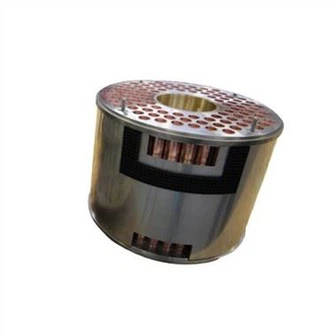
FWC Cooler For Marine Engine
Working Principle: Typically, a heat exchanger is used. When the engine is running, a mixture of freshwater and antifreeze circulates through the water jackets of engine components such as the cylinder block and cylinder head, absorbing heat generated by the engine and becoming high-temperature coolant. The high-temperature coolant then flows into the freshwater cooler (heat exchanger), where it exchanges heat with seawater (or other cooling medium). Seawater is drawn into the system through an intake port at the bottom of the ship, flows through the cooler, absorbs heat from the freshwater coolant, and exits the ship through an exhaust elbow after its temperature has risen. The cooled freshwater mixture then returns to the engine to continue the cooling cycle.
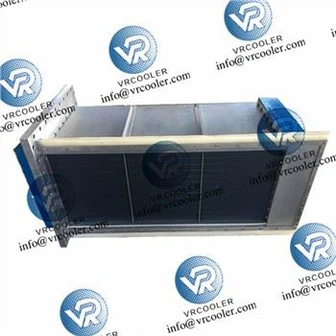
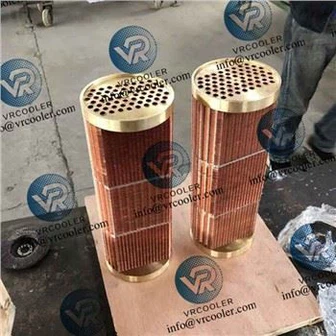
Structural features: Common types include shell-and-tube and plate-type structures. Shell-and-tube coolers consist of a shell, tube bundle, tube sheet, and baffles, featuring a relatively simple structure, easy maintenance, large heat dissipation area, and suitability for various operating conditions. Plate-type coolers, on the other hand, have a compact structure, high heat exchange efficiency, and minimal space requirements, making them ideal for vessels with limited space constraints.
Advantages: It prevents the engine's critical components from direct contact with seawater, avoiding corrosion and extending the engine's service life, particularly suitable for vessels operating in seawater environments. Additionally, the cooling medium is freshwater or antifreeze, which maintains stable water quality, minimizes scale and sediment formation, and ensures the cooling system's optimal heat transfer performance, thereby guaranteeing stable engine operation.
Application scenarios: Widely used in various types of vessels, including cargo ships, passenger ships, oil tankers, and container ships. Different types of vessels have varying requirements. Large cargo ships and oil tankers, with their complex power systems and high heat dissipation demands, typically require high-capacity, efficient freshwater coolers; passenger ships and container ships, however, prioritize compactness and lightweight design to accommodate the limited space available on board.