Empowering The New Energy Industry With High And Low Temperature Dry Coolers
The rapid expansion of the new energy industry has always been accompanied by the dual challenges of extreme environmental adaptation and equipment thermal management. Currently, new energy power generation projects continue to extend to remote and harsh environments. Wind farms are mostly located in high-altitude, Gobi, coastal and other areas, while photovoltaic power stations are widely deployed in areas with strong sunlight such as deserts and deserts. Energy storage power stations and power battery production workshops face complex problems such as large temperature and humidity fluctuations, dust pollution, and moisture condensation. Traditional cooling equipment is either limited by a narrow temperature range and slow response speed, or relies on water resources to achieve heat dissipation. It is difficult to adapt to new energy application scenarios with scarce water resources, and is prone to problems such as scaling, corrosion, and microbial growth. This not only affects the operational efficiency of the equipment, but also shortens its service life and increases maintenance costs. In this context, the emergence of high and low temperature dry coolers has precisely solved the core pain points of thermal management in the field of new energy, injecting new momentum into the high-quality development of the industry.
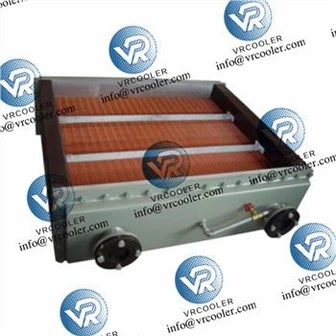
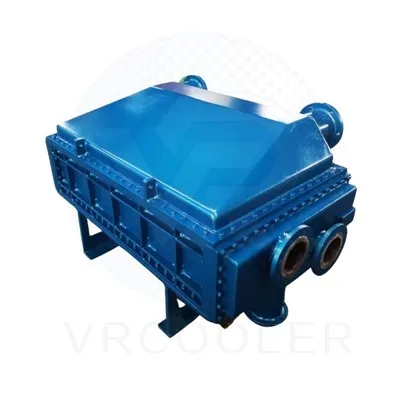
The core advantage of high and low temperature dry coolers lies in their integration of dry cooling and wide temperature range temperature control technology, achieving multiple breakthroughs in "waterless heat dissipation, precise temperature control, and extreme adaptation". Unlike traditional wet cooling systems, high and low temperature dry coolers use ambient air as the cooling medium and achieve heat dissipation through internal circulation of refrigerant (such as ethylene glycol solution) and heat exchange with air, without consuming water resources. This fundamentally solves the problem of water shortage in remote new energy stations, while avoiding the hidden dangers of scaling and corrosion caused by wet cooling, greatly reducing equipment operation and maintenance costs. Its core technological highlights are reflected in two aspects: wide temperature range adaptation and intelligent temperature control. It can achieve wide temperature range coverage from -60 ℃ to+250 ℃, with a temperature control accuracy of ± 0.1 ℃. It can not only meet the low-temperature start-up needs of high-altitude extremely cold areas, but also adapt to efficient heat dissipation in desert high-temperature environments, perfectly meeting the operational requirements of new energy equipment in different regions and working conditions.

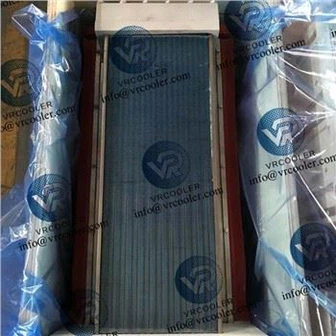
At the same time, the new generation of high and low temperature dry coolers incorporates intelligent technology and efficient heat exchange design, further enhancing their adaptability in the field of new energy. The device is equipped with high-precision sensors and PID regulation system, which can monitor the operating temperature, humidity, dust concentration and air pressure in real time. Through closed-loop control, the fan speed and heat exchange efficiency are automatically adjusted to achieve "on-demand temperature control", greatly reducing energy consumption and in line with the low-carbon development concept of the new energy industry. In terms of structural design, some high-end models use efficient composite fin materials and low wind resistance heat exchange structures, combined with IP65 and above protection level design, which can effectively resist the erosion of harsh environments such as dust, rain and snow, avoid mechanical jamming caused by dust entering the equipment, and reduce the heat dissipation of electrical components, ensuring the stable operation of new energy equipment in harsh environments. In addition, the innovative application of heat recovery systems enables high and low temperature dry coolers to use the waste heat generated during the refrigeration process for environmental preheating, increasing energy efficiency by more than 20% and further achieving efficient energy utilization.
As the core equipment in the thermal management field of the new energy industry, the application of high and low temperature dry coolers not only solves the stability problem of equipment operation in extreme environments, but also meets the development requirements of low-carbon, energy-saving, and environmental protection under the "dual carbon" strategy, providing important support for the large-scale and high-quality development of the new energy industry. With the continuous iteration of technology and the continuous expansion of application scenarios, high and low temperature dry coolers will further break through technological bottlenecks, optimize product performance, and play a more important role in fields such as wind power, photovoltaics, energy storage, and power batteries, helping the new energy industry achieve efficient, safe, and low-carbon development goals and injecting lasting power into the global energy transformation.