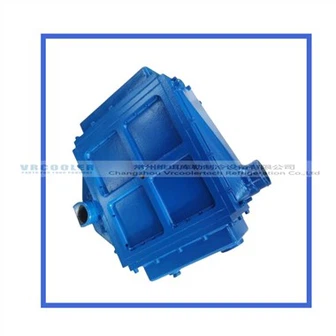
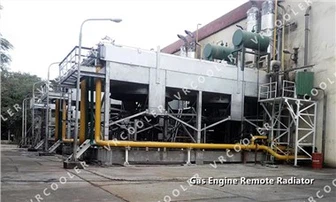
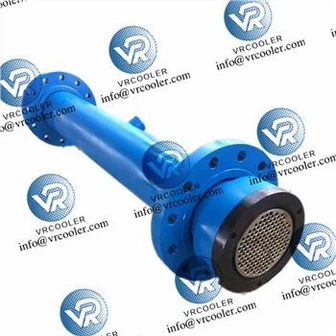
Double Tube Plate Structure Motor Cooler
Twin-tube motor coolers are mainly used in environments where leakage of the cooling medium can have serious consequences for the mainframe and where it is important to avoid such a phenomenon.
Double tube plate structure of motor cooler, including heat exchanger tube inserted in the core body of the cooler, also including tube plate and cavity plate, the cooler core body is fixedly mounted on the side beams, the tube plate and the cavity plate are perpendicular to the said heat exchanger tube, the heat exchanger tube and the water cavity, the water cavity is installed with inlet and outlet pipes, the tube plate and the cavity plate phase between the airtight cavity, the airtight cavity is connected to the drainage pipe. When the pipe joint leaks, the cooling medium enters the cavity formed by the pipe plate and the cavity plate and is discharged through the drain pipe, thus eliminating the cooling medium from entering the motor due to the leakage of the joint.

When the ship is running in the sea, the use of ordinary cooler will produce disastrous consequences if leakage occurs, the use of double tube type motor cooler will bring you the following benefits:
Leakage of the cooler is remotely controlled and alarmed.
The leaking cooler can continue to operate without damaging the mainframe and cooling equipment until the next planned shutdown or maintenance.
Seawater twin-tube coolers with special construction against galvanic corrosion ensure long-term operation of the cooler in seawater conditions.
Application Scenarios
Highly hazardous environments:
Hydrogen-cooled generators: Risk of explosion if cooling water leaks into hydrogen atmosphere.
Chemical/pharmaceutical equipment: Contamination of the cooling medium may lead to uncontrolled chemical reactions or substandard product purity.
Critical industrial equipment:
Large electric motors/generators (e.g., nuclear, ship propulsion motors): leakage can lead to insulation failure, short circuits, and other serious malfunctions.
Precision machinery (e.g. semiconductor manufacturing equipment): even small amounts of leakage can affect process accuracy.
Long-life and maintenance-free requirements: such as deep-sea equipment, remote offshore wind power, and other scenarios where maintenance is difficult.