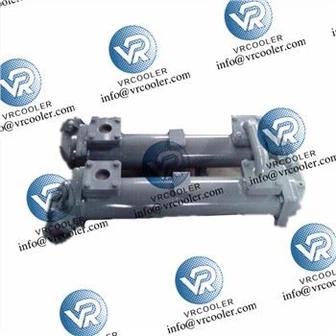
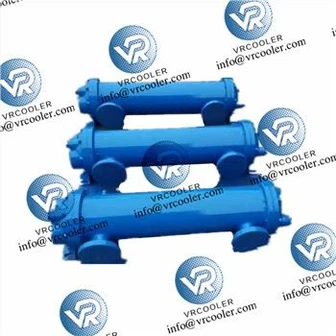
Box coolers are highly efficient and are the preferred solution for energy-saving heat exchange.
Multi scenario adaptation, carrying the core cooling mission
The use of box coolers focuses on fluid cooling, especially in scenarios with poor water quality and limited space. Its application areas are mainly concentrated in the following three areas, covering multiple core scenarios from maritime navigation to industrial production.
(1) Ship field: mainstream and indispensable cooling equipment
During the process of ship navigation, the stable operation of various main engines, auxiliary engines, and supporting systems cannot be separated from continuous cooling guarantee. As the mainstream cooling equipment in the field of ships, box coolers undertake key heat exchange tasks. It is mainly used to cool the cylinder liner water of the main engine, auxiliary engine, and bow thruster, avoiding equipment wear and failure due to high temperature operation; At the same time, it can cool the ship's hydraulic system, air conditioning system, and lubricating oil to ensure smooth operation of various systems. Whether it is small vessels such as tugboats, barges, fishing boats, or large and medium-sized vessels such as dredgers, supply ships, ferries, oil tankers, refrigerated ships, icebreakers, etc., box coolers can adapt to their navigation needs, especially suitable for complex water quality navigation environments such as inland rivers and nearshore waters, providing reliable guarantees for the safe navigation of ships.
(2) Hydroelectric power plants and industrial sectors: stable and efficient heat exchange support
In the operation of hydropower stations, the box cooler is mainly used to cool the lubricating oil and transformer oil of the generator set, prevent the insulation performance from deteriorating and the service life from shortening due to overheating of the equipment, and ensure the stable power generation of the generator set; At the same time, it can cool the circulating water and process medium, optimizing the operational efficiency of the hydropower station. In the general industrial field, it also plays an important role and can adapt to the cooling needs of various industrial equipment, especially suitable for production scenarios with poor water quality and limited space. In addition, in the field of aquaculture, box type coolers can achieve precise temperature control of water bodies. Whether it is heating or cooling, they can meet the strict requirements of aquaculture for water temperature and provide a suitable environment for the growth of aquaculture organisms.
(3) Special harsh scenarios: emergency and conventional cooling with outstanding adaptability
Compared to traditional cooling equipment, box coolers have particularly outstanding adaptability in harsh environments. It can operate normally in complex water bodies such as sandy, grassy, muddy, and polluted areas, and can adapt to low temperature environments in areas with ice, avoiding equipment failure caused by icing and blockage. Whether it is the complex water quality in coastal areas or the low-temperature conditions in cold regions, box coolers can maintain stable cooling performance without the need for additional complex protective equipment, making them an ideal choice for cooling needs in special scenarios.

Core advantages highlighted, leading the new direction of energy-saving heat exchange
The reason why box coolers can be widely used in multiple fields lies in their irreplaceable advantages in structure, energy consumption, space, maintenance, and other aspects compared to traditional cooling equipment. They not only reduce operating costs but also improve heat transfer efficiency and equipment reliability.
(1) Minimalist structure, strong reliability, and easy maintenance
The structural design of the box cooler is extremely simple, consisting only of U-shaped tube bundles, tube sheets, sealing rings, and end caps, without the need for complex shell structures. The number of components is small, and the failure rate is extremely low. Its unique U-shaped tube bundle design ensures that even if a single U-tube fails independently, it will not affect the normal operation of the entire equipment, without the need for shutdown maintenance, greatly improving the operational reliability of the equipment. At the same time, equipment maintenance is extremely simple, and there is no need to disassemble the tube bundle during the inspection process. Only simple inspections of vulnerable parts such as sealing rings and end caps are required, greatly reducing maintenance workload and downtime, and lowering the workload of operation and maintenance personnel.
(2) Significant energy savings, significantly reducing operating costs
Energy saving is one of the most prominent advantages of box coolers. Unlike traditional cooling equipment that requires secondary seawater pumps, filters, valves, pipelines, and other auxiliary equipment, box coolers do not require additional components and can operate without pumps, directly saving about 15kW of pump power. Calculated based on 5000 hours of equipment operation per year, saving only one fuel can save about 15000L per year. Over the long term, it can save users a significant amount of energy costs, meeting the energy-saving and consumption reducing needs of current industrial production and ship navigation.
(3) Save space and adapt to narrow installation environments
For scenarios with limited space such as ship engine rooms and hydropower plant engine rooms, the footprint of the equipment directly affects the rationality of the overall layout. The box cooler adopts an external installation method and can be directly installed in the underwater door or box outside the ship, without occupying core spaces such as engine rooms and machine rooms, effectively optimizing the equipment layout and reserving sufficient space for the installation and operation of other equipment. This design not only simplifies the installation process, but also avoids problems such as poor ventilation and inconvenient maintenance caused by equipment occupying internal space.
(4) Strong adaptability to water quality, more durable against pollution and corrosion
Poor water quality is the "pain point" of traditional cooling equipment, which is prone to scaling, blockage, corrosion and other problems. Box coolers precisely solve this problem. Its structural design endows it with extremely strong resistance to pollution and corrosion, able to withstand the erosion of complex water quality such as sand, water grass, oil pollution, etc. It is not easy to scale or adhere to marine organisms, and can also adapt to low-temperature freezing environments, avoiding equipment damage due to freezing. This strong adaptability to water quality enables the box type cooler to maintain stable operation in harsh environments, with a service life far exceeding that of traditional cooling equipment.
(5) Stable cooling, dual circulation ensures worry free operation
The box cooler adopts a dual circulation mode combining natural convection and forced convection to ensure stable and reliable cooling effect. When a ship is sailing, it relies on its speed to drive forced convection of seawater, achieving efficient heat transfer; When a ship is anchored, natural convection is achieved by relying on the density difference between seawater and cooling medium, providing continuous cooling support for the equipment without being affected by external factors such as engine room failures. This dual cycle design avoids the cooling interruption problem that may occur in a single cycle mode, ensuring stable operation of the equipment under various working conditions.
Summary
Box coolers have become ideal heat exchange equipment in various fields such as ships, hydropower stations, and industrial production due to their minimalist structure, significant energy-saving effect, strong environmental adaptability, and convenient maintenance characteristics. It not only solves the pain points of traditional cooling equipment being prone to failure, high energy consumption, and difficult maintenance in harsh environments, but also significantly reduces operation and maintenance costs for users, improving the stability and reliability of system operation. With the continuous increase in demand for energy-saving, efficient, and durable equipment in industrial production and shipping industries, box coolers, with their unique advantages, will play an important role in more scenarios and become the mainstream choice in the field of heat exchange.