Difference Between Air Compressor And Refrigeration Compressor | VRCOOLER
Although both devices compress gas, air compressors and refrigeration compressors serve totally different purposes. Their working media, operating pressure, temperature range, and supporting heat exchangers (coolers / condensers) are not interchangeable. Mis‑application will cause early failure and safety risk.
| Comparison Item | Air Compressor | Refrigeration Compressor |
|---|---|---|
| Core Purpose | Compress atmospheric air for pneumatic tools, tire inflation, industrial process air | Compress refrigerant gas for heat transfer, cooling & freezing |
| Working Medium | Ambient air (nitrogen‑oxygen mixed gas) | Refrigerant (R134a, R404A, R22, R410A, CO₂ etc.) |
| Compression Target | Raise air pressure, 0.7‑1.6 MPa typical working pressure | Raise refrigerant temperature & pressure for heat rejection |
| Discharge Temperature | High: 80℃ ~ 110℃ (screw air compressor) | Moderate: 60℃ ~ 90℃ for most common refrigerants |
| Lubrication | Large‑volume compressor oil mixed with compressed air; oil‑gas separation required | Refrigeration‑special oil, oil circulates together with refrigerant inside closed loop |
| Heat‑Rejection Component | Aftercooler / intercooler / oil cooler Cool down compressed air & lube oil; remove moisture from air | Condenser Condense high‑pressure refrigerant gas into liquid refrigerant |
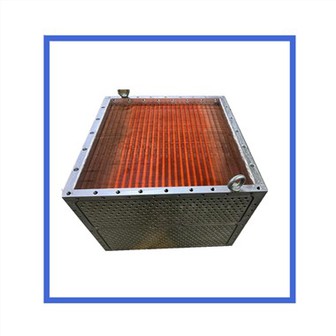
| Heat‑exchanger Type | Tube‑fin, plate‑fin(bar‑plate), shell‑tube air compressor coolers | Refrigeration condenser: microchannel, tube‑fin, shell‑and‑tube for refrigerant circuit |
| System Structure | Open‑loop system: intake ambient air, output compressed air for external use | Closed‑loop sealed circuit: refrigerant circulates inside, no gas discharge to atmosphere |
| Typical Application | Factory workshop, gas station, mining, machinery workshop | Air‑conditioner, chiller, cold storage, refrigeration unit |
| Media Leak Impact | Air leakage only efficiency loss | Refrigerant leakage → total cooling loss, environmental impact |

Working Principle Breakdown
Air Compressor
Draws in atmosphere air, compresses it to high pressure. After compression, hot compressed air flows into aftercooler to drop temperature, condense water vapor. Oil cooler cools lubricant oil. Output compressed air is consumed by downstream equipment. Air is continuously drawn from surroundings.
Refrigeration Compressor
Part of closed refrigeration cycle. It sucks low‑temperature low‑pressure refrigerant vapor from evaporator, compresses into hot high‑pressure vapor, sends to condenser to release heat and turn into liquid. Liquid refrigerant flows to expansion valve & evaporator to absorb heat, then returns back to compressor. Refrigerant never leaves the sealed loop under normal operation.
Critical Notes on Heat Exchanger Non‑Interchangeability
Air compressor coolers (aftercooler / oil cooler) are designed for air‑oil mixed flow, port layout, pressure rating and internal channel size are optimized for compressed air. Cannot directly use as refrigeration condenser.
Refrigeration condensers are designed for refrigerant phase change (gas‑to‑liquid). Using condenser as air compressor aftercooler will lead to insufficient heat dissipation and pressure mismatch.
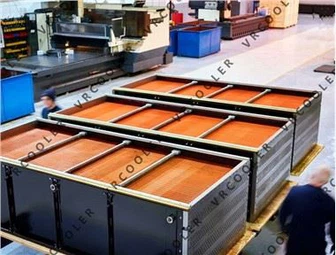
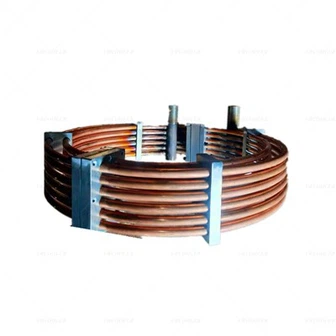
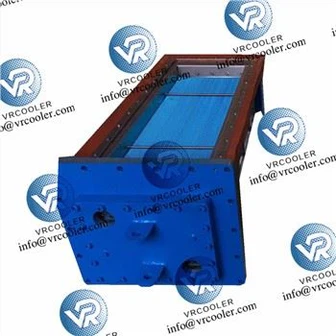
VRCOOLER manufactures dedicated heat exchangers for both fields: air compressor coolers for screw/piston machines, and custom condensers & evaporators for refrigeration & chiller systems.
Quick Summary for Selection
Need high‑pressure compressed air for tools / blowing → Air compressor + aftercooler / oil cooler
Need to remove heat for cooling or cold storage → Refrigeration compressor + condenser
Contact VRCOOLER for heat exchanger solution by drawings or sample parts via [email protected]