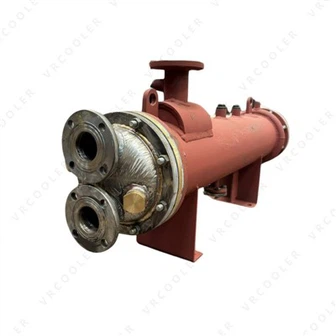
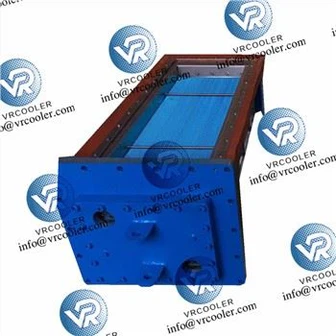
Core Technology Analysis Of Transformer Oil Air Cooler
1, Core working principle: Efficient cycle of oil gas heat exchange
The core function of TOAC is to quickly dissipate the heat generated during the operation of transformers into the environment. Its working logic is based on a dual cycle mechanism of "oil circulation heat exchange+air heat dissipation", which does not require complex auxiliary systems throughout the process and has strong operational stability. The specific process can be divided into four steps:
1. Heat generation and hot oil flow: During transformer operation, iron core loss and winding copper loss will continue to generate heat, which is absorbed by the insulating oil in the oil tank, causing the oil temperature to gradually rise; Hot oil flows into the oil collection chamber of the cooler through the inlet pipe under the action of gravity (natural circulation mode) or oil pump drive (forced circulation mode).
2. Core function of heat exchange: After entering the cooler core, the hot oil flows uniformly through the heat exchange elements (mostly finned tubes or plate fin structures), and the heat is transferred to the surface of the fins through the heat exchange wall. The design of the fins greatly increases the heat exchange area and improves the heat transfer efficiency, which is the core guarantee of TOAC's heat dissipation capability.
3. Air cooling process: The cooling fan (axial flow fan or centrifugal fan) forcibly sucks in ambient air, causing the air to flow uniformly over the surface of the fins and take away the heat on the fins; After absorbing heat, the temperature of the air rises and is naturally discharged from the cooler, completing the heat dissipation cycle on the air side.
4. Cold oil reflux cycle: After heat exchange, the temperature of the insulation oil decreases and flows back to the transformer oil tank through the oil outlet pipe, reabsorbing the heat generated by the transformer and forming a complete oil cycle. The entire process continues to cycle, ensuring that the transformer oil temperature is always controlled within the range specified by industry standards (usually the top oil temperature does not exceed 95 ℃, and the temperature rise does not exceed 55 ℃).
2, Key structural components: all components work together to ensure heat dissipation efficiency
The structural design of TOAC revolves around "efficient heat exchange, stable operation, and convenient maintenance". The core components include the heat exchange core, fan system, oil pipeline system, support shell, and control protection device. Each component performs its own duties and works together
1. Heat exchange core: As the "core heat exchange unit" of TOAC, it directly determines the heat dissipation efficiency. At present, the mainstream adopts a finned tube structure, consisting of a base tube (copper or steel tube) and fins (aluminum or copper fins). The fins are tightly combined with the base tube through expansion or welding to avoid excessive thermal resistance affecting heat transfer. Some high-end scenarios will adopt a plate fin core, which is more compact in size and has higher heat transfer efficiency, suitable for the needs of high-power transformers.
2. Fan system: Provides a power source for forced air cooling, divided into axial flow fans and centrifugal fans. Axial flow fans have small volume, low energy consumption, and low noise, making them suitable for low to medium power cooling needs; Centrifugal fans have high air pressure and stable air volume, making them suitable for large coolers or scenes with poor ventilation. The fan can automatically start and stop according to the oil temperature, achieving energy-saving operation.
3. Oil pipeline and oil collection chamber: responsible for the distribution and circulation of oil. The oil collection chamber is divided into an inlet chamber and an outlet chamber to ensure that hot oil flows evenly through each heat exchange tube and avoid uneven local heat exchange. The oil pipeline adopts seamless steel pipes, and the interface is sealed to prevent oil leakage. At the same time, it is equipped with drain valves and vent valves for easy maintenance in the later stage.

4. Bracket and shell: serve as structural support and protection. The bracket is welded with steel structure and treated with anti-corrosion on the surface. It can be designed with various installation methods such as wall mounted, top mounted, and side mounted according to the installation scenario; The shell is made of bent steel plate, which has dustproof, rainproof, and noise reduction functions, protecting the internal core and fan from external environmental influences.
5. Control and protection device: Ensure the safe and stable operation of equipment, including temperature controller, fan overload protection, and linkage control module. The temperature controller can monitor the oil temperature in real time and automatically start and stop the fan (staged cooling) according to the high or low oil temperature; Overload protection can prevent the fan from burning out due to malfunction; The linkage control module can be integrated with the transformer control system to achieve functions such as fault alarm and remote monitoring.
3, The core advantage of TOAC: an efficient cooling solution that adapts to multiple scenarios
Compared to other types such as water-cooled coolers and forced oil circulation water coolers, TOAC has become the mainstream cooling choice for oil immersed transformers due to its structural and performance advantages. Its core advantages are reflected in four aspects:
1. High heat transfer efficiency and compact size: The fin enhanced heat transfer design has a much higher heat dissipation power per unit volume than traditional cooling equipment. With the same heat dissipation requirements, TOAC has a smaller volume and occupies less space, making it suitable for limited space scenarios such as substations and industrial plants.
2. Reliable operation and convenient maintenance: simple structure, no complex pipeline connections and auxiliary systems, few fault points; Daily maintenance only requires cleaning the fins, checking the fan and oil circuit seals, with low maintenance costs and a service life of up to 15-20 years.
3. Energy saving and controllable, low energy consumption: The fan can automatically start and stop according to the oil temperature to avoid ineffective operation. Compared with forced water cooling systems, it does not require a large amount of water resources and reduces energy consumption by more than 30%, which is in line with the industry trend of green energy conservation.
4. Strong environmental adaptability: Customization can be made according to different scenarios, such as adding anti-corrosion, dustproof, and salt spray resistant coatings for outdoor scenes, and adapting to harsh environments such as coastal areas, mines, and petrochemicals; Low temperature scenarios can be equipped with heat tracing devices to ensure normal operation in winter.
In summary, the core value of transformer oil air cooler lies in its high efficiency, stability, energy saving, and wide adaptability. Its working principle and structural design are all centered around the heat dissipation requirements of transformers, and it is a key supporting equipment to ensure the long-term safe operation of oil immersed transformers. Understanding its core technology can provide important references for subsequent selection, use, and maintenance.