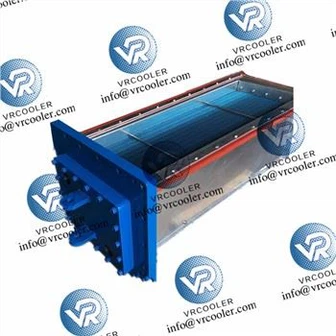
Coolers For Transformers
Transformer in the operation process, due to the iron core and winding loss, will produce a lot of heat, make the oil temperature rise. Transformer oil cooler transfers heat out of the oil through heat exchange, reducing the oil temperature and ensuring that the transformer operates within a safe temperature range .
Excessive oil temperature leads to increased losses and reduced efficiency of the transformer. Effective cooling can maintain a lower oil temperature, reduce losses and improve the operating efficiency of the transformer.
High temperature accelerates the aging of transformer insulation materials, reduces its insulation performance and shortens the service life of the transformer. Reducing the oil temperature through the cooler can slow down the aging speed of the insulating material and extend the service life of the transformer.
Type
Air-cooled transformer oil cooler: the use of fan-generated airflow, accelerate the air flow on the surface of the cooler, take away the heat. This kind of cooler structure is relatively simple, low cost, easy maintenance, suitable for small or not particularly high cooling requirements of the transformer .
Water-cooled transformer oil cooler: through the circulating water in the cooler internal pipeline flow, absorb heat and take away. Water-cooled cooler cooling efficiency, can handle larger heat load, but need to be equipped with special water cooling system, including water pumps, cooling towers, etc., the cost is higher, maintenance is relatively complex, generally used for large, high-capacity transformers .
Strong oil air-cooled transformer oil cooler: on the basis of air-cooled, increase the oil pump, forced transformer oil circulation in the cooler, improve the cooling effect. This kind of cooler is suitable for transformers with medium capacity or above, especially in the case of high ambient temperature or large load, it can effectively reduce the oil temperature .

Structure Composition
Heat dissipation tube: It is the core component of the cooler, usually made of metal material, such as copper tube or steel tube. Transformer oil flows inside the tubes and the heat is transferred to the external cooling medium (air or water) through the tube walls.
Heat sink: Increase the heat dissipation area and improve the heat dissipation efficiency. Heat sinks are usually installed on the outside of the heat pipe, in contact with air or water, and emit heat to the surroundings by means of convection and radiation.
Oil pump: In strong oil air-cooled and strong oil water-cooled coolers, the oil pump is used to force the transformer oil to circulate between the cooler and the transformer, to ensure that the hot oil can enter the cooler in time for cooling, and the cold oil can then return to the transformer to take away the heat.
Fan: The fan in the air-cooled cooler is used to generate airflow, accelerate the air flow on the surface of the heat sink, and improve the heat dissipation effect.
Water cooling system: water-cooled cooler equipped with water cooling system, including water pumps, cooling towers, water piping, etc.. The water pump transports the water to the cooler, and after absorbing the heat, the hot water is cooled through the cooling tower and then recycled.
Working Principle
Heat exchange process: transformer oil absorbs the heat generated inside the transformer during operation and the temperature rises. Hot oil enters into the cooler, through the heat pipe and external cooling medium (air or water) for heat exchange. Heat is transferred from the hot oil to the heat pipe, and then by the heat pipe to the cooling medium, so that the oil temperature is reduced .
The role of the cooling medium: air-cooled cooler, fan-driven air flow, and constantly take away the heat on the surface of the heat sink, to maintain the temperature difference between the heat pipe and the air, to promote the heat exchange. In water-cooled coolers, circulating water is used as the cooling medium, by absorbing the heat from the heat sink tubes, bringing them out of the cooler, and then releasing the heat in the cooling tower to achieve the cooling cycle .