Comprehensive Guide For Operation And Maintenance Of Bearing Oil Cooler
1, Core principle and structural characteristics of bearing oil cooler
The heat transfer principle of the bearing oil cooler is based on "medium convection heat transfer", which reduces the oil temperature by exchanging heat between the cooling medium (usually cooling water, cooling air) and high-temperature lubricating oil. According to the structural form, common types include tube coolers (shell and tube, coil), plate coolers, and air coolers. Their core components all include heat exchange elements (tube bundles, plates), inlet and outlet ports, inlet and outlet ports (or air duct ports), sealing structures, etc.
Tube type cooler: using copper or stainless steel tubes as heat exchange tube bundles, high-temperature lubricating oil flows inside (or outside) the tubes, and cooling water flows outside (or inside) the tubes, transferring heat through the tube walls. It has the characteristics of strong structure, high pressure resistance, and strong adaptability, and is suitable for heavy load and high temperature conditions.
Plate cooler: composed of multiple layers of corrugated plates, lubricating oil and cooling water flow in opposite directions on both sides of the plates, with a large heat transfer area, high efficiency, compact structure, suitable for medium and low pressure, medium and small flow scenarios.
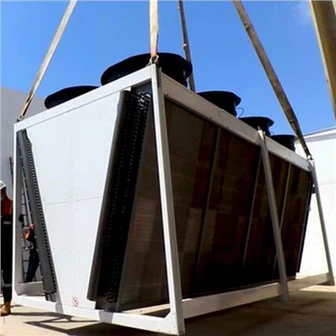
Wind cooler: relying on forced ventilation by a fan, the heat of lubricating oil is transferred to the air through finned heat exchange tubes, without the need for cooling water, energy-saving and environmentally friendly, suitable for water shortage or mobile equipment scenarios.
Regardless of the type, the core operation and maintenance logic revolves around "ensuring smooth heat exchange channels, intact sealing performance, and stable medium circulation".

2, Daily maintenance: low-cost and high return basic protection
Daily maintenance needs to be implemented daily, focusing on the three core aspects of "cleaning, monitoring, and sealing", timely eliminating potential hazards, and avoiding small problems from escalating into equipment failures.
(1) External cleaning and environmental maintenance
Clean the dust, oil stains, and debris on the surface of the cooler and the inlet and outlet (or pipe mouth) daily to ensure smooth heat dissipation channels - the air cooler needs to focus on cleaning the dust between the fins, which can be blown in the direction of the fins with a soft bristled brush or low-pressure compressed air (pressure ≤ 0.3MPa); Tube or plate coolers need to clean the oil stains on the surface of the shell to avoid affecting natural heat dissipation. At the same time, check whether the installation foundation of the equipment is firm, whether the fasteners are loose or corroded, and whether there are any obstacles blocking the surrounding area to ensure smooth ventilation or water circulation.
(2) Operation status and parameter monitoring
After starting the equipment, monitor the key status through visual, auditory, and instrument monitoring: observe that there is no leakage in the cooler (lubricating oil or cooling water), and there are no oil stains or water droplets at the seal; Listen to the running sound without any abnormal vibration or impact sound, and the air cooler fan runs smoothly without whistling or jamming; Monitoring core parameters: lubricating oil inlet and outlet temperature (temperature difference should be between 5-15 ℃ under normal operating conditions, specific requirements should meet the requirements of the host equipment), cooling water (or air) inlet and outlet temperature, and no abnormal fluctuations in system pressure. If the oil temperature is found to be too high (usually above 60 ℃) or the pressure suddenly changes, the machine should be stopped immediately for troubleshooting.
(3) Inspection of sealing and connection parts
After daily shutdown, check the flange, joint, valve and other connection parts of the cooler inlet and outlet oil ports, inlet and outlet water ports to ensure that the sealing gasket (ring) is not aged or cracked, the clamps or bolts are tightened in place, and there are no leakage marks. For plate coolers, it is necessary to check the tightening status of the clamping bolts to avoid loosening caused by vibration and affecting the sealing performance.
The core of the operation and maintenance of bearing oil coolers lies in the principle of "prevention is more important than cure" - timely cleaning and monitoring of daily maintenance can effectively reduce the occurrence rate of failures; The deep cleaning and component replacement of periodic maintenance can ensure the long-term efficient operation of equipment; Accurate positioning and handling of troubleshooting can minimize production losses to the greatest extent possible.
In actual operation and maintenance, it is necessary to flexibly adjust the maintenance plan based on equipment type, host requirements, and working conditions, especially paying attention to medium quality management (lubricating oil cleanliness, cooling water quality) and sealing performance maintenance, which are the key factors affecting the service life and efficiency of the cooler. Through standardized and systematic operation and maintenance management, the guarantee role of bearing oil coolers can be fully utilized to build a solid defense line for the stable operation of industrial rotating equipment.