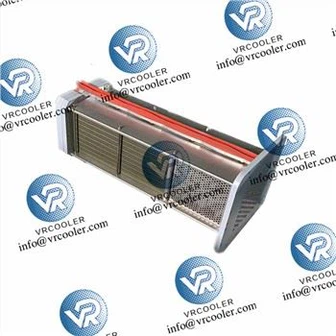
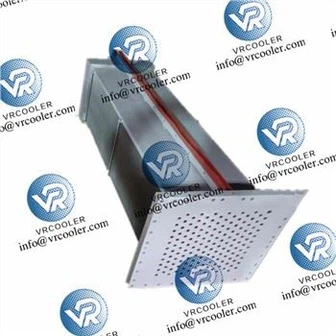
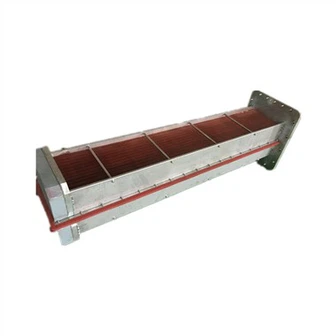
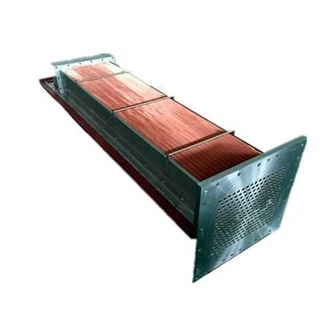
Common Classification Of Tube Bundle Heat Exchangers
Tube Bundle Heat Exchanger—Introduction to Tube Bundle Heat Exchanger
In the tube bundle heat exchanger, two kinds of fluids exchange heat, one flows in the tube, and its stroke is called the tube side; the other flows outside the tube, and its stroke is called the shell side. The wall of the tube bundle is the heat transfer surface. In order to improve the heat transfer coefficient of the fluid outside the tube, a certain number of transverse baffles are usually installed in the shell. The baffle plate can not only prevent the short circuit of the fluid, increase the velocity of the fluid, but also force the fluid to cross-flow through the tube bundle multiple times according to the prescribed path, so that the degree of turbulence is greatly increased. Commonly used baffles are circular and disc-shaped, and the former is more widely used. Every time the fluid passes through the tube bundle in the tube is called a tube pass, and every time the fluid passes through the shell is called a shell pass. In order to increase the velocity of the fluid in the pipe, appropriate partitions can be set in the heads at both ends to divide all the pipes into several groups evenly. In this way, the fluid can go back and forth multiple times through only part of the tubes at a time, which is called multi-pass. Similarly, in order to increase the flow velocity outside the tube, longitudinal baffles can be installed in the shell to make the fluid pass through the shell space multiple times, which is called multi-shell pass. In the tube bundle heat exchanger, due to the different temperature of the fluid inside and outside the tube, the temperature of the shell and the tube bundle is also different.

Tube Bundle Heat Exchanger - Common Classification of Tube Bundle Heat Exchangers
Fixed tube-sheet heat exchanger: The fixed-tube-sheet heat exchanger welds the tube sheets at both ends directly to the shell. It is mainly composed of shell, tube sheet, tube bundle, head and other main components. The shell is provided with a tube bundle, and the two ends of the tube bundle are fixed on the tube sheet by welding, expansion joint or expansion welding, and the outer periphery of the tube sheet and the head flange are fastened with bolts. The fixed tube-sheet heat exchanger has the advantages of simple structure, low cost, easy manufacture, and convenient cleaning and maintenance of the tube side, but it is difficult to clean the shell side, and there is a temperature difference stress after the tube bundle is manufactured. When there is a large temperature difference between the heat exchange tube and the shell, an expansion joint should be provided on the shell.

Floating head heat exchanger: One end of the floating head heat exchanger is fixed between the shell and the tube box, and the other end of the tube plate can move freely in the shell, that is, the thermal expansion of the shell and the tube bundle can be free. Therefore, there is no temperature difference stress between the tube bundle and the shell. Generally, the floating head is detachable, and the tube bundle can be drawn out and loaded freely. This structure of the floating head heat exchanger can be used in the working condition where there is a large temperature difference between the tube bundle and the shell. The cleaning and maintenance of the tube bundle and shell are relatively convenient, but its structure is relatively complicated, and the requirements for sealing are relatively high.

"U"-shaped tube heat exchanger: U-shaped tube bundle heat exchanger is a U-shaped heat exchange tube, and both ends are fixed on the same tube sheet. Since the shell and the heat exchange tubes are separated, the heat exchange tube bundle can expand and contract freely, and no temperature difference stress will be generated due to the temperature difference of the medium. The U-tube heat exchanger has only one tube sheet, no floating head, and a relatively simple structure. The tube bundle can be pulled out and loaded freely, which is convenient for cleaning. It has the advantages of a floating head heat exchanger. However, since the heat exchange tubes are made into U-shaped bends with unequal radii, the outermost heat exchange tube can be replaced after damage. Other tubes The damage can only be blocked. At the same time, compared with the fixed tube-sheet heat exchanger, because the heat exchange tube is limited by the bending radius, there is a gap in the center of the tube bundle, and the fluid is easily short-circuited, which affects the heat transfer effect.