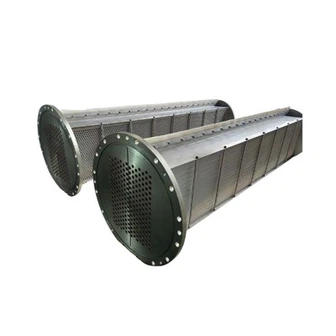
Application Field Of Heat Recovery
1, Industrial sector (core and largest scale)
Industry is the main battlefield for heat recovery applications, covering metallurgy, building materials, chemical industry, light industry, etc., with high/medium temperature flue gas, process wastewater, and waste heat recovery of cooling media as the main focus.
Iron and Steel Metallurgy
Sintering/blast furnace/converter flue gas waste heat power generation, meeting over 30% of the plant's own electricity needs.
Coke oven waste gas and red coke sensible heat recovery produce steam/electricity.
Continuous casting cooling wastewater, steel rolling heating furnace flue gas waste heat recovery, preheating combustion air or hot water production.
Cement/Building Materials
The high-temperature residual heat (180-300 ℃) generated by the rotary kiln head/tail can meet 1/3-1/2 of the power consumption in the factory area.
Preheating raw materials with preheater exhaust gas, drying limestone, replacing coal-fired hot blast stoves.
Petrochemical/Coal Chemical
Catalytic cracking, ammonia synthesis, acid production and other high-temperature flue gas waste heat are used to produce steam/electricity, achieving "cold electricity combined supply".
Distillation tower and reactor process flow heat integration can reduce comprehensive energy consumption by 15% -30%.
Circulating cooling water and waste heat pump are used for heating in the factory area/process heating.
Light Industry Manufacturing (Food/Textile/Paper/Coating)
Preheat the waste heat from food drying/cooking waste gas into the air and produce hot water, and use a heat pump for dehumidification to reduce energy consumption.
Recycling of waste heat from printing and dyeing/papermaking wastewater and condensate water to reduce boiler fuel consumption.
Car/metal coating drying exhaust gas heat recovery, preheating drying air.
Glass/Ceramic/Nonferrous Metals
Preheating combustion air and generating electricity with high-temperature flue gas (500-800 ℃) from the kiln.
The waste heat from the flue gas of the aluminum/copper melting furnace produces steam for drying, electrolysis and other processes.
2, Building and HVAC field (main force in civil/commercial energy conservation)
Focus on ventilation, air conditioning, and domestic hot water, recover exhaust heat, condensation heat, and waste heat from sewage, and reduce building energy consumption by 30% -50%.
Ventilation heat recovery (HRV/SERVER)
Residential/office/hospital fresh air system, recovers exhaust heat to preheat/pre cool fresh air, energy-saving in both winter and summer.
Air conditioning condensation heat recovery
The condensing heat of the chiller unit preheats domestic hot water, pool water, and floor heating, improving the overall energy efficiency of the system.
Sewage/wastewater source heat pump
Recycling building drainage and municipal sewage heat for heating/cooling, with a COP of 3.75-4.0.
Waste heat utilization in data centers
The server's heat dissipation (35-45 ℃) is heated by a heat pump to supply heating/hot water to the surrounding areas, with an energy efficiency ratio of 3.2.

3, Transportation and mobile equipment field
Recycling engine, battery, and exhaust waste heat to improve energy efficiency and endurance.
Automobile (fuel/hybrid/pure electric)
Engine exhaust/coolant waste heat heating, preheating battery, winter range increased by 10% -15%.
Pure electric vehicle model with heat pump and waste heat recovery, reducing air conditioning energy consumption.
Ship/Rail Transit
The main engine exhaust heat (WHR) is used for power generation, meeting 60% of the daily electricity needs of ships and saving millions of fuel annually.
Train air conditioning exhaust and residual heat recovery from braking resistors are used for heating the train carriages.
4, Energy and Power Sector
Improve power generation efficiency and achieve cogeneration of heat, electricity, and cooling.
Gas/Steam Combined Cycle (CCPP)
Gas turbine high-temperature exhaust (500-600 ℃) produces steam from waste heat, with a combined cycle efficiency of over 60%.
Garbage incineration/biomass power generation
Incineration of flue gas waste heat for power generation and heating, with a comprehensive energy utilization rate of over 80%.
Low temperature waste heat power generation (ORC)
Recycling 80-150 ℃ medium and low temperature waste heat (industrial/geothermal/data center) for power generation, suitable for low-grade heat sources.
5, Municipal and Regional Energy Sector
Build a city level thermal energy cycle network.
Regional heating/cooling
Integrate industrial waste heat, data center heat dissipation, and waste incineration heat to provide centralized heating through pipeline networks, replacing traditional boilers.
sewage treatment plant
The waste heat from digester biogas and the heat recovery from sludge drying waste gas are used as heating/drying heat sources in the factory area.
Industrial park energy closed-loop
Upstream enterprises supply waste heat to downstream, and low-temperature waste heat is supplied to parks/communities through heat pumps, forming a "thermal energy closed-loop".