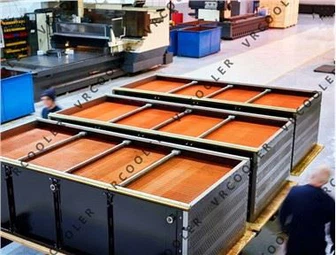
Air-To-Water Heat Exchangers For Large Hydro-Generators
Air-to-water heat exchangers play a crucial role in the cooling systems of large hydro-generators. These systems are essential for maintaining optimal operating temperatures, ensuring efficiency, and prolonging the life of the generator components.
Function
Cooling Process:
The air-to-water heat exchanger transfers heat from the generator components (usually the rotor or stator) to water, which then carries this heat away.
Air is drawn through the exchanger, where it absorbs heat from the water circulating through the system.
Heat Transfer Mechanism:
The heat exchanger typically consists of a series of fins and tubes that maximize surface area for efficient heat transfer.
As water flows through the tubes, the air passing over the fins cools it down, allowing the water to carry away the absorbed heat.

Benefits
Efficiency:
Improved thermal management leads to enhanced efficiency of the hydro-generator by preventing overheating and maintaining optimal operating temperatures.
Reliability:
Consistent cooling reduces the risk of thermal stress on components, thereby increasing the reliability and lifespan of the generator.
Environmental Adaptability:
Air-to-water heat exchangers can be designed to operate effectively in various environmental conditions, making them suitable for different geographical locations where hydro-generators are installed.
Space-Saving Design:
These systems can be compact, allowing for easier integration into existing hydro-generator setups without requiring significant changes to infrastructure.
Applications
Power Plants: Used in large hydroelectric power plants where heat management is critical for the performance of turbines and generators.
Industrial Settings: Employed in industrial applications where large-scale water cooling is necessary, especially in conjunction with hydroelectric systems.