Air Cooler For Medium-Speed Diesel Engine
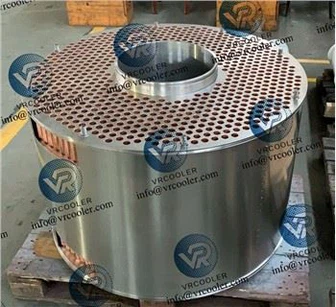
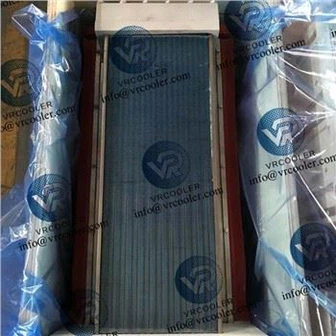
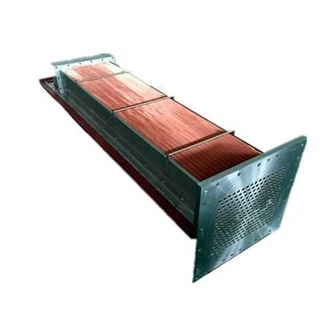
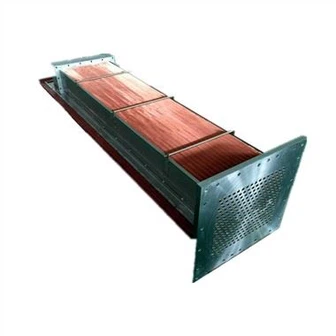
Air cooler for Medium-Speed Diesel Engine
An air cooler (charge air cooler, CAC) for medium‑speed diesel engines cools hot, pressurized air from the turbocharger before it enters the cylinders. It increases air density, boosts power, cuts fuel use, and lowers thermal load-critical for 4‑stroke, turbocharged engines (300–1,500 rpm) in marine, power generation, and industrial applications.
Core Function & Benefits
Lower intake temperature: Turbo discharge ≈150–220°C; cooler drops to 45–65°C.
Higher density & power: +10–25% power; better fuel efficiency (–5–10%).
Reduce thermal stress: Lower exhaust temp (≈5–10°C per 1°C cooler intake); protects pistons, liners, valves.
Emissions control: Cuts NOₓ and soot; meets Tier II/III standards.
Main Types (By Cooling Medium)
Water‑Cooled (Most Common for Medium‑Speed)
Tube‑and‑fin / shell‑and‑tube: Fresh water (low‑temperature circuit, 38–45°C) cools charge air.
Raw water / sea water: Direct seawater cooling (marine only); CuNi 90/10 tubes for corrosion resistance.
Pros: Compact, high efficiency, stable outlet temp.
Cons: Needs separate LT circuit; risk of scaling/fouling.
Air‑Cooled (Air‑to‑Air)
Fin‑and‑core: Ambient air via fans; no water needed.
Pros: Simple, no water system, low maintenance.
Cons: Larger size; efficiency drops in high ambient temps (>35°C)