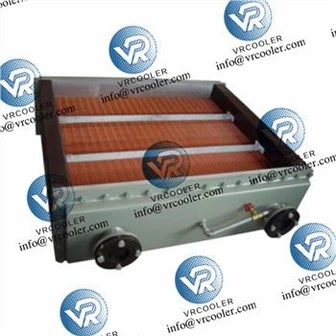
Working Principle Of High And Low Temperature Dry Cooler in Power Plant
A high and low temperature dry cooler is a piece of thermal equipment used in power plants to cool the mass in the steam cycle of a power plant. The dry cooler works by transferring heat from the mass to the ambient air to achieve a cooling effect.
High and low temperature dry coolers usually consist of two sections: a high-temperature section and a low-temperature section.

In the high-temperature section, a high-temperature mass (usually steam) exits the generator or turbine and enters the piping or tube bundle in the high-temperature section. In the high-temperature section, the mass releases heat to cool it down. During this process, the heat is transferred to the surrounding air by convection and radiation.
In the low-temperature section, the cooled mass enters the pipes or bundles. In the cryogenic section, the mass is further cooled and condenses to form a liquid. During this process, heat is also transferred to the surrounding air by convection and radiation.
The entire high and low temperature dry cooler is designed to transfer as much heat as possible to the surrounding environment to cool the mass to the right temperature for recycling. The dry cooler uses air as the cooling medium, so no additional water resources are required and the environmental and water treatment issues associated with water are avoided.
The use of high and low temperature dry coolers in power plants can increase the efficiency of power generation, reduce dependence on water resources and minimize environmental impact. They are commonly used in different types of power plants such as coal-fired power plants, gas-fired power plants and nuclear power plants.