What Is The Principle Of Air Compressor Heat Recovery Heat Exchangers?
What Is The Principle Of Air Compressor Heat Recovery Heat Exchangers?
The principle of air compressor heat recovery heat exchanger is mainly based on the principle of heat transfer.
When a centrifugal air compressor is in operation, the compression process generates a large amount of heat, causing the temperature of the compressed gas to rise. The heat recovery heat exchanger utilizes this high temperature gas in indirect or direct contact with another medium, usually water.
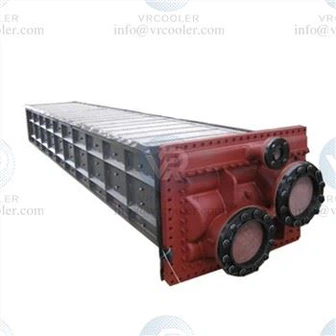
In the case of indirect heat transfer, heat is transferred from the high-temperature gas to the low-temperature medium through the metal walls of the heat exchanger, raising the temperature of the medium. For example, in a shell and tube heat exchanger, the gas flows inside the tubes and the water flows in the shell course outside the tubes, and the heat is transferred through the tube walls.
In the case of direct heat transfer, the high temperature gas is mixed directly with the water for heat exchange, which is more efficient, but may require certain requirements such as water quality.
Through this heat transfer process, the transfer of waste heat generated by the air compressor to the medium is realised to achieve the purpose of heat recovery. This recovered heat can be further utilised, for example, for domestic hot water supply, heating, etc., to improve energy use efficiency and achieve energy saving and emission reduction. For example, in some industrial production, the recovered heat is used to preheat fluids required for other processes, or in buildings the recovered heat is used to provide warmth in the room.