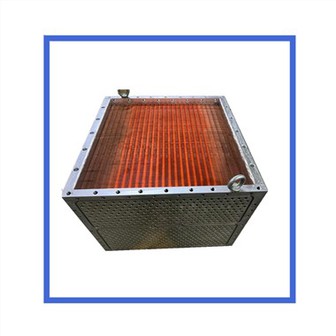
What Is The Difference Between Intercoolers And Aftercoolers?
What is the difference between intercoolers and aftercoolers?
In the field of compressed air systems, the use of intercoolers and aftercoolers plays a vital role in ensuring efficient and reliable operation. Although these two types of coolers have a similar function of cooling compressed air, there are clear differences between them.
Intercoolers, also known as intercoolers, are used in multi-stage compressor systems. The main function of an intercooler is to reduce the temperature of the compressed air before it moves on to the next stage of compression. It achieves this by using a heat exchanger which transfers the heat of compression to the cooling medium, usually air or water. The cooled compressed air then enters the next compression stage at a lower temperature, thereby reducing the energy required for further compression. This results in increased compressor efficiency and reduced energy consumption.
On the other hand, aftercoolers are located at the point of use, usually downstream of the compressor. They are designed to remove the compressed heat and moisture that accumulates in the compressed air as it passes through the system. The compressed air is cooled to a temperature close to the ambient temperature before it is used in pneumatic tools and equipment. By lowering the temperature and removing moisture, the aftercooler reduces the risk of damage to downstream equipment and minimises the possibility of moisture-related problems such as corrosion or freezing.
The main differences between intercoolers and aftercoolers lie in their location, purpose, and working principle in the compressed air system.
Intercoolers are usually installed in the compressor unit and are used to cool the compressed air between the compression stages. On the other hand, aftercoolers are usually installed downstream of the compressor and are used to cool the compressed air immediately before it is used by downstream equipment. The two types of coolers also operate on different principles. The intercooler is designed to remove the heat of compression, while the aftercooler is designed to remove heat and moisture from the compressed air.
In summary, intercoolers and aftercoolers are an important part of a compressed air system, but they differ significantly in terms of location, purpose, and principle of operation. Intercoolers are used to cool compressed air between stages of compression, while aftercoolers are used to cool compressed air immediately before it is used by downstream equipment. Understanding the differences between these two types of coolers is essential to determine which type of cooler is suitable for a particular application and to ensure that the compressed air system operates efficiently and reliably.