What Is Marine Condenser?
What is marine condenser?
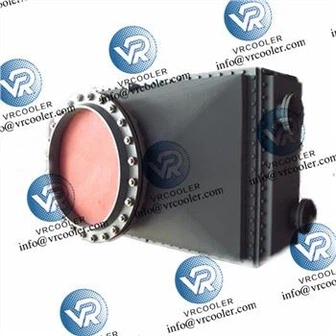
A marine condenser is a component of a ship's cooling system that is used to remove heat from the engine's cooling water. It is typically a heat exchanger that uses seawater as a cooling medium to remove heat from the engine's cooling water, which is then recirculated back into the engine.
The marine condenser is an essential part of a ship's cooling system because it helps to maintain the engine's operating temperature within a safe and efficient range. If the engine were to overheat, it could cause damage or even failure, which could be catastrophic for the ship and its crew.
There are different types of marine condensers, including surface condensers and direct-contact condensers. In a surface condenser, the cooling water flows through tubes, while the hot engine water flows over the outside of the tubes, and heat is transferred through the tube walls. In a direct-contact condenser, the engine water is sprayed directly into the cooling water, which absorbs the heat and carries it away.
A shell and tube type marine condenser is a specific type of marine condenser that uses a shell and tube heat exchanger design. In this type of marine condenser, the cooling water flows through the tubes, while the hot engine water flows over the outside of the tubes, and heat is transferred through the tube walls.
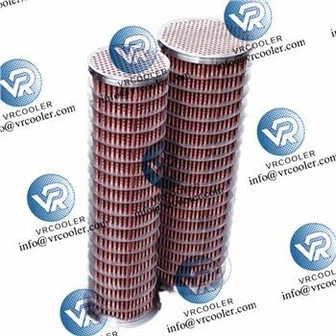
The shell and tube type marine condenser typically consists of a cylindrical shell or casing, with a bundle of tubes inside. The tubes are usually made of copper or copper alloy, which is a good conductor of heat and is resistant to corrosion. The tubes are arranged in a parallel or helical pattern inside the shell, and are often fitted with fins to increase the surface area available for heat transfer.
The cooling water flows through the tubes, while the hot engine water flows over the outside of the tubes. Heat is transferred through the tube walls, and the cooling water absorbs the heat and carries it away. The cooling water is usually sea water, which is pumped into the condenser from the ship's sea chest or cooling water system.
The shell and tube type marine condenser is a reliable and efficient way to remove heat from a ship's engine cooling water. It is commonly used in larger vessels and is well-suited for applications where the cooling water contains contaminants or impurities that can cause fouling or corrosion in other types of condensers.

Design: The shell and tube type marine condenser is designed to transfer heat from the engine cooling water to the sea water. The shell is typically made of steel, and is designed to withstand the high pressures and temperatures associated with marine engine cooling systems. The tubes are usually made of copper or copper alloys, which are good conductors of heat and resistant to corrosion.
Operation: The operation of the shell and tube type marine condenser is fairly simple. The hot engine cooling water flows over the outside of the tubes, while the sea water flows through the tubes. Heat is transferred from the engine cooling water to the sea water through the tube walls. The sea water absorbs the heat and is then discharged overboard, while the engine cooling water is returned to the engine to absorb more heat.
Efficiency: The efficiency of the shell and tube type marine condenser depends on a number of factors, including the flow rates of the cooling water and sea water, the temperature difference between the two fluids, and the design of the heat exchanger. Generally, the efficiency of a shell and tube type marine condenser is quite high, with most designs achieving heat transfer coefficients of around 5,000-10,000 W/m2K.
Maintenance: The maintenance requirements of a shell and tube type marine condenser are relatively low. However, it is important to keep the tubes clean and free of debris, as fouling can reduce the heat transfer efficiency of the heat exchanger. This can be accomplished by periodically flushing the tubes with clean water or using chemical cleaners. Additionally, the condenser should be inspected regularly for signs of corrosion or other damage.
Applications: The shell and tube type marine condenser is commonly used in a variety of marine applications, including ships, offshore platforms, and other marine vessels. It is especially well-suited for use in large vessels with high cooling water flow rates, as well as in applications where the cooling water contains impurities that can cause fouling or corrosion in other types of condensers.