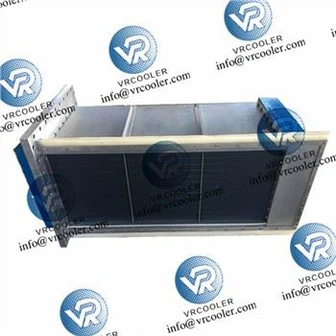
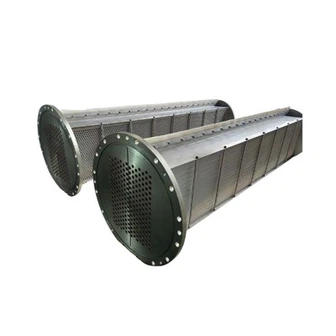
What Is A Shell And Tube Condenser?
What is a Shell and Tube Condenser?
A shell and tube condenser is a common type of heat exchanger used to condense steam or gas into a liquid. It consists of a shell and a set of internal tubes through which a coolant (usually water) flows to cool the steam or gas flowing through the shell and condense it into a liquid. The following details the working principles and applications of shell and tube condensers.

The working principle of a shell and tube condenser:
Steam or gas enters the shell through the inlet and flows through the internal tubes.
The coolant enters the tube from the inlet and flows through the outside of the tube, exchanging heat with the steam or gas.
The temperature of the vapour or gas is reduced and condensed into a liquid, which then flows out the outlet.
The coolant absorbs heat, increases in temperature and flows out of the outlet.
Applications of shell and tube condensers:
Shell and tube condensers are widely used in air conditioning, refrigeration, chemical, petroleum, food, pharmaceutical and electric power industries. Among them, air conditioning and refrigeration is one of the most widely used fields.
In air conditioning and refrigeration systems, shell and tube condensers are typically used to condense refrigerants from a vapour state into a liquid state for subsequent recycling. In addition, shell and tube condensers are also widely used in the chemical, petroleum, food, pharmaceutical and power industries for heat conversion and waste heat recovery. Due to their stable structure and high heat transfer efficiency, shell and tube condensers have become one of the preferred equipment for heat exchangers in all industries.

In summary, the shell and tube condenser is a common type of heat exchange equipment used to condense steam or gas into a liquid. With its stable structure and high heat transfer efficiency, it is widely used in air conditioning, refrigeration, chemical, petroleum, food, pharmaceutical and electric power industries.