What Factors Affect The Heat Transfer Efficiency Of HT Charge Air Coolers
What Factors Affect the Heat Transfer Efficiency of HT Charge Air Coolers?
Structural design Factors of the Cooler
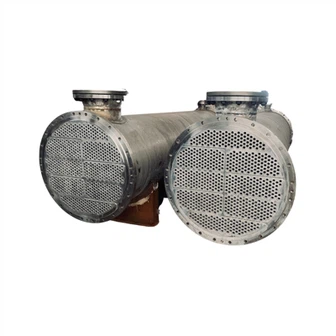
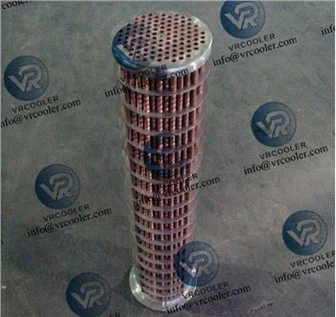
Heat exchanger tube type and layout:
The shape and structure of the heat exchanger tubes have a significant impact on heat transfer efficiency. For example, the use of finned tubes can greatly increase the heat transfer area. Parameters such as fin shape (e.g., flat fins, corrugated fins, serrated fins, etc.), fin height, and fin spacing all affect heat transfer. Serrated fins can increase air turbulence and improve heat transfer efficiency by about 15% - 20% compared to flat fins.
The arrangement of the tubes (e.g., straight or staggered) is also critical. Staggered tube arrangement creates more turbulence in the air flow and enhances convective heat transfer, which is generally 10% - 15% more efficient than the downstream arrangement.
Runner design:
Cooler internal air flow channel and cooling medium flow channel design is directly related to the fluid flow state. If the cross-sectional area of the flow channel is not uniform, may lead to local flow rate is too high or too low, flow dead zone or short circuit phenomenon. Reasonable design of the flow path can make the fluid uniform distribution, so that the air and cooling medium can fully contact the heat transfer tube, thereby improving the heat transfer efficiency. For example, the use of gradual expansion or gradual contraction of the flow channel design, can reduce the flow resistance, improve the stability of the fluid, and thus improve the heat transfer efficiency of about 5% - 10%.
Size and compactness of the cooler:
The size and compactness of the cooler can affect heat transfer efficiency. Larger cooler sizes generally provide more heat transfer area, but may also increase the flow path of the air and cooling medium, resulting in increased flow resistance. Compact designs can achieve more heat transfer in a limited space, but if they are too compact, fluid flow and heat dissipation may be compromised. By optimizing the size and compactness of the cooler to best match the heat transfer area with the fluid flow, the heat transfer efficiency can be effectively improved.

Characteristic Factors of the Working Fluid
Air-side characteristics:
The inlet air temperature has a significant effect on the heat transfer efficiency. Higher intake air temperature will reduce the temperature difference between the air and the cooling medium, according to the principle of heat transfer, the temperature difference will reduce the power of heat transfer will be weakened, thus reducing the heat transfer efficiency. For example, when the intake air temperature increases from 40°C to 60°C, the heat transfer efficiency may be reduced by 10% - 15%.
The air flow rate is also an important factor. Appropriate increase in air flow rate can enhance convection heat transfer, because the increased flow rate will make the thermal boundary layer between the air and the surface of the heat exchanger tube thinner, and the heat transfer is easier. However, if the air flow rate is too high, it will increase the resistance to flow on the air side and may lead to excessive local pressure loss. Generally, the heat transfer efficiency is higher when the air flow rate is in the range of 3 - 6m/s. For every 1m/s increase in flow rate, the heat transfer efficiency can be increased by 3% - 5%.
Cooling medium side characteristics:
The temperature and flow rate of the cooling medium (e.g. water or other coolant) also affect the heat transfer efficiency. A lower cooling medium temperature facilitates the transfer of heat from the air to the cooling medium. If the temperature of the cooling medium increases, the temperature difference with the air is reduced, resulting in a decrease in heat transfer efficiency. An increase in the flow rate of the cooling medium can take away more heat. When the flow rate of the cooling medium is increased from 80% to 100% of the design flow rate, the heat transfer efficiency can be increased by about 5% - 8%.

Dirt and impurity factors
Air-side fouling:
If dirt such as dust, oil, insect debris, etc. accumulates on the surface of the fins or heat exchanger tubes on the air side, a layer of thermal resistance will form on the surface. This layer of thermal resistance will hinder the transfer of heat from the air to the heat exchanger tube, reducing the efficiency of heat transfer. For example, when the thickness of dirt on the fin surface reaches 0.5mm, the heat transfer efficiency may be reduced by 20% - 30%. Regular cleaning of the air side can effectively restore heat transfer efficiency.
Dirt on the cooling medium side:
For cases where water or other liquids are used as the cooling medium, if the cooling medium contains impurities such as minerals, scale, microorganisms, etc., scaling will form on the inner wall of the heat exchanger tubes on the cooling medium side. These scales will reduce the inner diameter of the heat exchanger tube, increase the flow resistance, and also reduce the thermal conductivity of the heat exchanger tube, thus reducing the heat transfer efficiency. For example, when the thickness of the scale on the cooling medium side reaches 1mm, the heat transfer efficiency may be reduced by 30% - 40%. By filtering, purifying and regular chemical cleaning of the cooling medium, it is possible to prevent scaling and maintain a high heat transfer efficiency.

Operating condition factors
Load change:
In the actual operation of gas generator, the load will often change. When the load increases, the intake volume and intake temperature of the engine will increase accordingly, which requires the HT charge air cooler to be able to quickly adapt to such changes and ensure good heat exchange. If the design margin of the cooler is insufficient, the heat exchange may not be timely under high load conditions, leading to excessive intake air temperature and affecting engine performance. On the contrary, under low load conditions, the heat exchange efficiency may be affected due to low air flow rate and other reasons.
Environmental factors:
Ambient temperature and humidity can affect the work of the cooler. In high temperature and high humidity environments, physical properties such as the density and specific heat capacity of air will change, while the heat dissipation conditions on the air side will deteriorate, leading to a reduction in heat transfer efficiency. For example, in a high-temperature, humid environment in the summer, heat transfer efficiency may be reduced by 10% - 15% compared to spring and fall. In addition, corrosive gases in the environment (e.g., sulfur dioxide, hydrogen sulfide, etc.) may corrode the metal parts of the cooler, affecting its performance and life, and indirectly reducing the heat transfer efficiency.