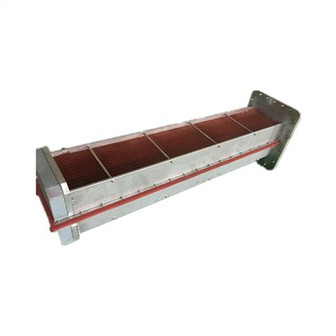
What Causes Leaks in Shell And Tube Heat Exchanger?
The pressure on the water side of the surface type recuperator heat exchanger is greater than the pressure on the steam side. Once the piping system leaks, the feed water will rush into the shell, causing the steam side to be full of water. Water may be poured back into the steam turbine along the steam extraction pipe, causing deformation of the steam turbine cylinder, changes in differential expansion, vibration of the unit, and even blade breakage and other accidents.
This kind of accidents caused by the leakage of the heat exchanger caused the shutdown of the whole set of equipment and the water ingress of the steam turbine occurred many times in the factory. Therefore, it is very important to analyze the cause of heat exchanger leakage and find out countermeasures to reduce leakage as much as possible.
Leakage cause analysis
The leakage of the internal piping system of the tube heat exchanger is mainly divided into the leakage of the tube itself and the leakage of the port.

1 Causes of tube port leakage
1.1 Excessive thermal stress
When the shell-and-tube heat exchanger is in operation, due to the different temperatures of the cold and hot fluids, the temperatures of the shell and the tube wall are different from each other. This difference causes the thermal expansion of the shell and the tube to be different. When the temperature difference between the two is large, the tube may be twisted, or the tube may be pulled loose from the flower plate, or even destroy the entire heat exchanger. In this regard, it is necessary to consider the influence of thermal expansion structurally, and adopt various compensation methods.
During the start-up and shutdown process of the heat exchanger, the temperature rise rate and temperature drop rate exceed the regulations, so that the high-pressure tubes and tube sheets are subject to greater thermal stress, and the welds or expansion joints connecting the tubes and tube sheets are damaged. Cause port leakage: when the load changes too fast during peak regulation or the main engine or heat exchanger fails and the heat exchanger is suddenly shut down, if the steam side stops steam supply too quickly, or after the steam side stops steam supply, the water side continues to enter Water supply, because the tube wall is thin and shrinks quickly, and the tube sheet is thick and shrinks slowly, often causing damage to the weld or expansion joint between the tube and the tube sheet. This is why the allowable temperature drop rate is only 1.7°C/min-2.0°C/min, which is stricter than the allowable temperature rise rate of 2°C/min-5°C/min.
1.2 Tube sheet deformation
It is mainly the processing deformation of the tube sheet and the deformation generated during processing. The tube is connected to the tube sheet, and the deformation of the tube sheet will cause leakage at the port of the tube.
The water side of the high tube plate has high pressure and low temperature, while the steam side has low pressure and high temperature, especially if there is a built-in hydrophobic cooling section, the temperature difference is even greater.
If the thickness of the tube sheet is not enough, the tube sheet will have a certain deformation. The center of the tube sheet will bulge toward the steam side with low pressure and high temperature. On the water side, the tubesheet is sunken in center.
When the load of the main engine changes, the pressure and temperature of the steam adding side change accordingly. Especially when the peak shaving range is large, the peak shaving speed is too fast or the load changes suddenly, under the condition of using a constant speed feed water pump, the water side pressure will also change greatly, and may even exceed the rated pressure of high feed water: these changes Distortion of the tubesheet can cause leakage at the tube ends or permanent deformation of the tubesheet.
If the inlet valve of the high fuel tank leaks internally, after the high power tank is shut down during the operation of the main engine, the water side of the high fuel tank will be heated and the pressure will be increased at a constant volume. If there is no safety valve on the water side or the safety valve fails, the pressure may rise very high , will also deform the tube sheet.
1.3 Improper plugging process
Generally, conical plugs are commonly used to weld plugging pipes. When driving into the tapered plug, the force should be moderate; if the hammering force is too large, the tube hole will be deformed, affecting the connection between the adjacent tube and the tube sheet, which will cause damage and cause new leakage. During the welding process, if the preheating, welding seam position and size are not suitable, it will cause damage to the connection between the adjacent tube and the tube sheet. Using other plugging methods, such as expansion tube plugging, explosion plugging, etc., if the process is improper, it will also cause leakage near the nozzle. Therefore, a strict plugging process should be followed.
2 The reason for the leakage of the pipe itself
2.1 Scouring and erosion
One reason is that when the flow velocity of the steam is high and the steam flow contains large water droplets, the outer wall of the pipe is washed by the two-phase flow of steam and water, becomes thinner, perforates or bursts under the pressure of the water supply. The main reasons for the steam-water two-phase flow inside the heat exchanger are: first, the superheated steam in the superheated steam cooling section and its outlet does not meet the design requirements; second, the drain water level of the heat exchanger is kept too low or there is no water level Or the hydrophobic temperature is much higher than the design value or the hydrophobic flow resistance is large or the extraction pressure suddenly drops and other factors make the hydrophobic flash evaporate, and when the hydrophobic enters the next-stage heat exchanger, there will be steam, which will wash the heat exchanger tube and cause damage; 3. It is that when a pipe in the high-pressure tube is damaged and leaks, the high-pressure feed water rushes out from the leak at a great speed, which will wash away the adjacent pipes or partitions. Another cause is direct impact from steam or hydrophobicity. Due to the unreasonable material and fixing method of the anti-shock plate. It breaks or falls off during operation, and loses the anti-scour protection effect; the area of the anti-scour plate is not large enough, and the water droplets move with the high-speed airflow, hitting the tube bundle outside the scour-proof plate; the distance between the shell and the tube bundle is too small, so that the steam flow at the inlet The speed is very high.
Stress corrosion cracking refers to the cracking of metals or alloys caused by the joint action of tensile stress and specific corrosive media. It is characterized in that most of the surface is not damaged, only a part of fine cracks penetrate the metal or alloy. Stress corrosion cracking can occur within the commonly used design stress range, so the consequences are serious. The important factors causing stress corrosion cracking are temperature, solution composition, metal or alloy composition, stress and metal structure.
2.2 Tube Vibration
When the feed water temperature is too low or the unit is overloaded, when the steam flow and velocity between the tubes of the heat exchanger exceed the design value, the tube bundle with certain elasticity will vibrate under the action of the fluid disturbance force on the shell side. When the exciting force When the frequency of the tube bundle coincides with the natural vibration frequency of the tube bundle or its multiple, it will cause the tube bundle to resonate and greatly increase the amplitude, resulting in repeated force on the connection between the tube and the tube sheet, causing damage to the tube bundle. The mechanism of tube bundle vibration damage generally includes:
①Due to vibration, the stress of the pipe or the joint between the pipe and the tube sheet exceeds the fatigue endurance limit of the material, causing the pipe to fracture due to fatigue;
②The vibrating tube rubs against the metal of the clapboard in the tube hole supporting the clapboard, which makes the tube wall thinner and finally causes rupture;
③ When the vibration amplitude is large, the adjacent pipes in the middle of the span will rub against each other, causing the pipes to wear or fatigue.
2.3 Corrosion at the feedwater inlet end of the pipe
Erosion damage at the inlet pipe end only occurs in carbon steel heat exchangers. It is a damage process caused by the joint action of erosion and corrosion: the mechanism is that the oxide film formed on the surface of the pipe wall metal is destroyed and taken away by the high turbulent feed water. , The metal material is continuously lost. Eventually lead to the breakage of the pipe. Sometimes the damaged surface can be extended to the pipe end weld or even the tube sheet: when the pH value of the feed water is low (less than 9.6), the oxygen content is high (greater than 7μg/L), the temperature is low (less than 260°C), and the degree of turbulence is large, prone to erosion.
2.4 Corrosion
When the tube material of the low-pressure heat exchanger is copper, the low-pressure copper tube is often forced to be replaced due to serious leakage. When the pH value is 8.5~8.8, the corrosion rate of copper is the lowest. Carbon steel requires a pH value of not less than 9.5. The pH of the boiler feed water was too high, causing corrosion of the copper pipes. The main factors affecting the corrosion of carbon steel pipe bundles are: oxygen content and pH value of feed water: when the dissolved oxygen in the feed water is too high or the pH value is too low, the inner wall of the high-pressure pipe will be corroded, so the concentration of dissolved oxygen in the feed water should not exceed 7pg/L, and the pH value was maintained between 9.3 and 9.6. If oxygen exists on the shell side, it will cause oxygen corrosion on the outer wall of the tube bundle. Copper deposits: Can cause pitting corrosion, forming pits. Temperature affects the formation of Fe3O4 oxide film on the surface of carbon steel: it is generally believed that the Fe3O4 oxide film is relatively stable when it is above 260°C. Below this temperature, the degree of protection of the Fe3O4 oxide film depends on the pH of the feed water and other environmental factors. When the pH value is greater than 9.6, it is safe.
2.5 Poor material and workmanship
The material of the tube is poor, the thickness of the tube wall is uneven, the tube is defective before assembly, the expansion part is over-expanded, and there are tensile damage marks on the outside of the tube. When the heat exchanger encounters abnormal working conditions, it will cause a lot of damage to the tube.
3. Countermeasures
1 Treatment measures after leakage occurs
When a leak occurs, the pressure of the feed water is reduced, and the amount of feed water sent to the boiler is reduced. Therefore, when leakage of the heat exchanger pipe system is found, the heat exchanger should be stopped immediately to reduce the number of damaged pipes and reduce the degree of damage. When the unit is out of operation, you should check whether there is any leakage in the high-pressure generator, and find a way to eliminate it.
For port leakage, the original weld metal should be scraped off before repair welding, and appropriate heat treatment should be carried out to eliminate thermal stress: for the leakage of the pipe itself, the form and location of the leakage of the pipe bundle should be checked first, and a suitable pipe plugging process should be selected , plug the two ports of the tube. No matter what kind of plugging process is used, in order to ensure the quality of the plugged pipe, the end of the blocked pipe must be well treated, so that the tube plate and tube hole are round and clean, and have a good contact surface with the plug. In the case of cracks or erosion at the connection between the tube and the tube sheet, the original tube material and weld metal at the end must be removed so that the plug is in close contact with the tube sheet.
2 Precautions
2.1 Port Leakage Precautions
In the manufacture of heat exchangers, there should be tube sheets of sufficient thickness, good tube hole processing, surfacing welding, tube expansion joints, and welding processes. In terms of operation, the temperature rise rate and temperature drop rate of the heat exchanger should Do not exceed the regulations, there must be a safety valve on the water side to prevent overpressure, and there must be a correct plugging process for maintenance.
2.2 Leakage prevention measures of the pipe itself
(1) Preventive measures against erosion
Limit the steam or hydrophobic flow rate on the shell side and prevent flashing in the cooling section; the steam at the outlet of the steam cooling section must have sufficient residual superheat; the anti-scouring plate must be firmly fixed, the area is sufficient, and the material is good; the water level on the shell side is kept normal. Operation with low water level or no water level is prohibited.
(2) Preventive measures for pipe vibration
Install a steam side safety door on the high steam side; limit the flow rate of steam or water on the shell side; the distance between the tubes should be large enough, which reduces the shell side flow rate on the one hand, and on the other hand reduces the possibility of the tubes colliding with each other and being damaged by friction: Limitation The length of the free section of the tube bundle.
(3) Erosion prevention measures at the water inlet end of the pipe
The flow velocity of the fluid in the tube side or in the tube side not only affects the value of the convective heat transfer coefficient, but also affects the thermal resistance of the dirt, thus affecting the size of the total heat transfer coefficient. Especially for fluids containing sediment and other particles that are easy to deposit, the flow rate is too low and may even cause pipeline plugging, which seriously affects the use of equipment. However, increasing the flow rate will significantly increase the pressure loss. Therefore, it is very important to choose an appropriate flow rate. Limit the flow rate of feed water, stop using a row of heat exchangers or block a large number of heat exchangers, the flow rate in the pipe will increase significantly, at this time, part of the feed water should enter the boiler through the bypass or reduce the load of the unit; control the oxygen content of the feed water to be small 7μg/L, control the pH value of feed water at 9.2-9.6.
(4) Corrosion prevention measures
Stress relief, stress can have various sources, such as applied stress, residual stress, welding stress and stress generated by corrosion products. When selecting materials, make the unit into a copper-free system, which is beneficial to the anti-corrosion of the whole unit and the quality control of steam crystals; to have a complete air release system, it is generally recommended not to use a step-by-step series connection for pipeline connections. Prevent non-condensable gas from accumulating in the heat exchanger with low pressure; ensure the normal operation of the air release system. When starting up, the water side and steam side should be drained of air, and the quality of the water supply must be qualified; good anti-corrosion measures must be taken when leaving the factory , to prevent corrosion during storage and transportation. For carbon steel pipe heat exchangers, nitrogen-filled anti-corrosion methods are usually used for both the steam side and the water side; , steam or nitrogen filling anti-corrosion measures, and properly adjust the pH value of the deoxygenated water on the water side to play a protective role.
(5) Preventive measures for pipe leakage caused by poor material and workmanship
The pipe wall should be at least 2.0mm above to improve the erosion resistance. Each tube should be tested for flaw detection and hydrostatic test before assembly; the tube bundle should be heat-treated and free from visual defects; the tube hole of the tube plate should maintain a certain roughness, tolerance and concentricity, and the chamfer or rounding of the tube hole should be smooth and free of defects. glitch.
(6) Preventive plugging
Perform preventive blockage. It is recommended to open a bypass hole of a certain size on the tube sheet while blocking some tubes to reduce the flow rate of feed water and reduce corrosion. This method has been adopted in many power plants at home and abroad, and it has been proved that it can properly prolong the life of the heat exchanger and reduce the number of leaks .
(7) Process selection
In the heat exchanger, which kind of fluid flows through the tube side and which kind flows through the shell side, the following points can be considered as general principles for selection:
a) Materials that are not clean or easy to decompose and scale should flow through the side that is easy to clean. For straight tube bundles, the above-mentioned materials should generally be routed inside the tubes, but when the tube bundles can be removed for cleaning, they can also be routed outside the tubes.
b) The fluid that needs to increase the flow rate to increase its convective heat transfer coefficient should go in the tube, because the cross-sectional area inside the tube is usually smaller than the cross-sectional area between the tubes, and it is easy to use multiple tube passes to increase the flow rate.
c) Corrosive materials should go inside the pipe, so that the shell can be made of ordinary materials, only the pipe, tube sheet and head should be made of corrosion-resistant materials.
d) The material with high pressure goes inside the pipe, so that the shell can not bear the high pressure.
e) Materials with high or low temperature should be routed in the pipe to reduce heat loss. Of course, for better heat dissipation, high-temperature materials can also be allowed to go through the shell.
f) The steam is generally passed into the shell side, because it is convenient to discharge the condensate, and the steam is cleaner, and its convective heat transfer coefficient has little relationship with the flow rate.
g) Fluids with high viscosity generally flow through the shell side space, because when flowing in the shell side with baffles, the cross section and flow direction of the flow channel are constantly changing, which can be done at low Re numbers (Re greater than 100) Achieving surge flow is conducive to improving the convective heat transfer coefficient of the fluid outside the tube.
The above points cannot be satisfied at the same time, and sometimes they are contradictory, so we should grasp the main aspects and make appropriate decisions according to the specific situation.