What Are The Differences in Cooling Methods For Marine Transformers Of Different Powers?
What are the differences in cooling methods for marine transformers of different powers?
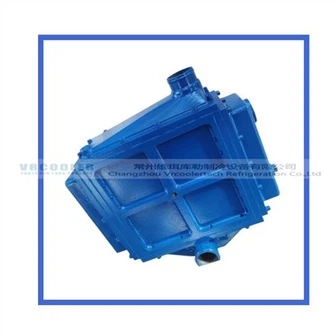
Heat Exchanger / Air Cooler / Oil Cooler for Small Power Transformer
Cooling method: usually air cooling or natural cooling.
Advantages:
Simple structure and easy installation.
Low maintenance cost, suitable for small ships or light load applications.
Disadvantages:
Cooling efficiency may be insufficient under high load or high temperature environment.
Heat Exchanger / Air Cooler / Oil Cooler for Medium power transformer
Cooling method: You can choose air cooling or water cooling, depending on the specific application.
Advantages:
Air cooling is suitable for occasions where the load changes little and has a certain flexibility.
Water cooling can provide higher cooling efficiency and is suitable for continuous high load situations.
Disadvantages:
Air cooling may not be efficient enough under extreme conditions; water cooling requires a stable water source.
Heat Exchanger / Air Cooler / Oil Cooler for High power transformer
Cooling method: usually a water cooling system is used, and it may even be combined with oil cooling.
Advantages:
Efficient cooling capacity, able to handle a large amount of heat, and keep the transformer operating within a safe temperature range.
Suitable for long-term high-load operation, which can improve the service life and performance of the transformer.
Disadvantages:
Requires a complex cooling system and high maintenance costs.
Depends on a stable water source and may be limited in some cases.
When choosing a cooling method, in addition to power, factors such as the purpose of the ship, environmental conditions, maintenance capabilities, and economics need to be considered. High-power transformers are usually more dependent on efficient cooling systems to ensure safe and reliable operation.